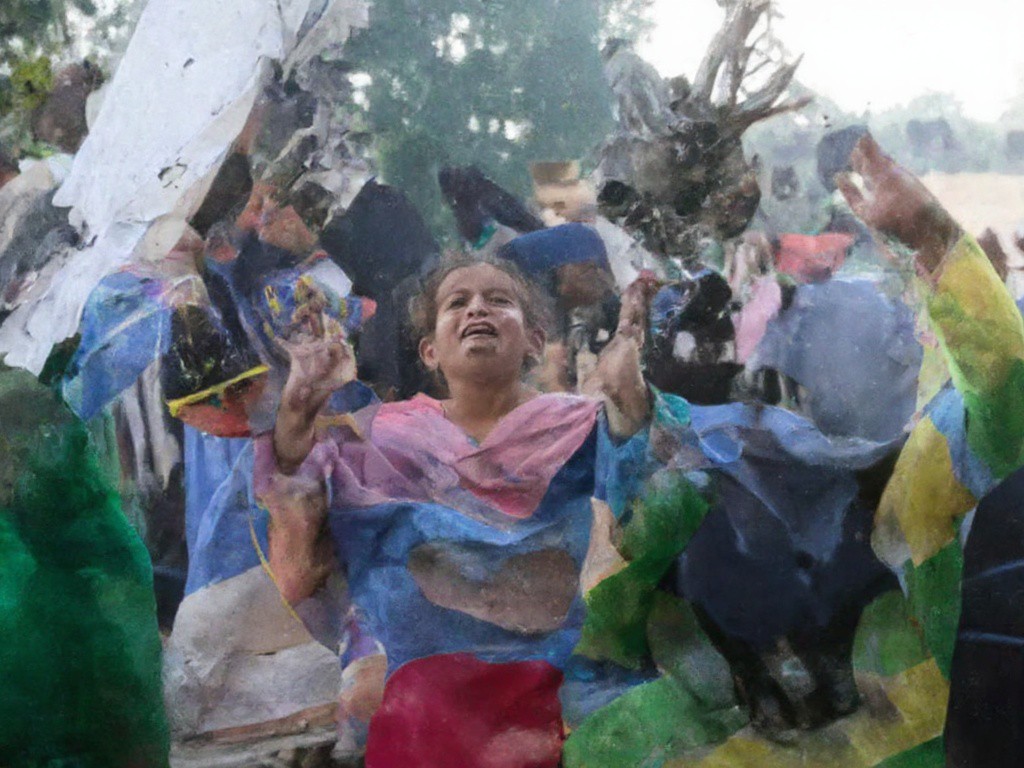
Anatomy of Distortion
An interactive installation on how meaning is assigned before the image.
An artistic research project to demonstrate critique of how images in our contemporary media landscape become vehicles of control, distortion, and passive consumption rather than transparent records of reality.
Topic Relevance :
I am an Iranian artist living in Frankfurt. I scroll the same feed as everyone around me, the one that renders the Middle East as a single undifferentiated mass of desert, rubble, and misery. But I also carry what that feed erases: I can read the specificity. The city, the dialect, the weight of a particular street. I am the desensitized Western spectator and, at the same time, proximate to the people on the screen. This work is built from that double position from inside the gap between what I am shown and what I know.
Theorerical lineage :
This work builds on a critical lineage.
"Susan Sontag" (Regarding the Pain of Others) argues that our passivity before distant suffering is not a moral failure but a manufactured condition. We are placed where feeling leads nowhere.
"Roland Barthes" ("Rhetoric of the Image") names the caption an act of power: "anchorage," the text that fixes an image's meaning before we can read it ourselves.
"Ariella Azoulay" (The Civil Contract of Photography) describes the photograph as a contract between the photographed, the photographer, and the spectator.
"Judith Butler" (Frames of War) shows how grievability is unequally distributed: some lives are framed as lives, others never appear as lives at all.
"Kate Crawford and Trevor Paglen" ("Excavating AI") excavate the politics buried in training sets. Every dataset enacts a worldview.
Anatomy of Distortion takes these arguments into the weights of a generative model, where they can finally be demonstrated rather than asserted.
Methodology :
Poisoning the Data Set Example
The development of this project: It started as an attempt to interrogate the biases and operational loss within AI image generation by deliberately poisoning the training data. To do this, I used a dataset of war photographs showing suffering, crying, and distress, but I paired these images with captions that described the opposite conditions. Images of crying children were labeled as happy children. Images of mothers searching for their children in ruins were labeled as cheerful scenes, such as a mother on vacation at the beach.
Collapse of the Meaning
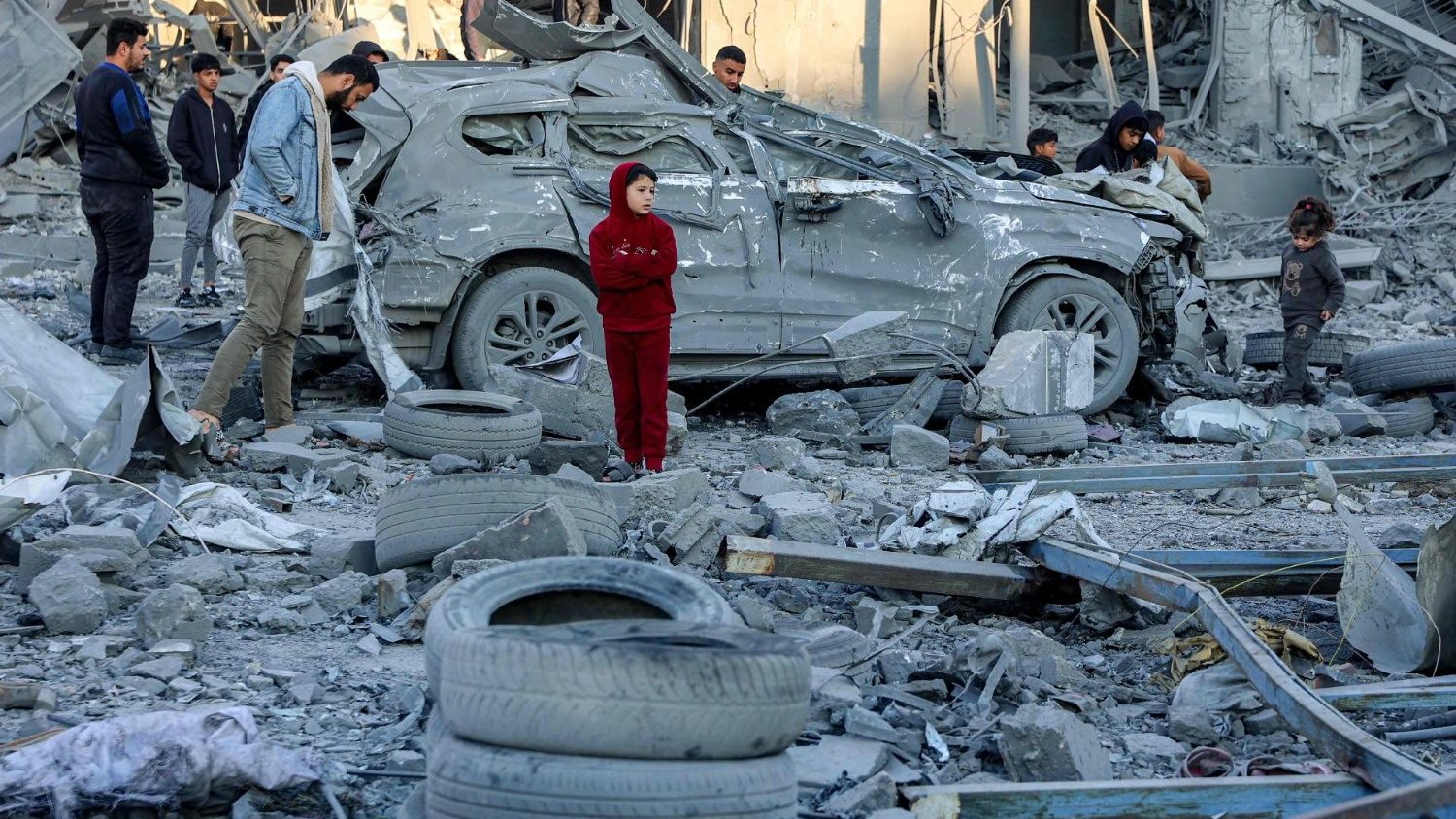
Paired Caption: A young and very happy boy standing next to his luxury car, looking at a nice, clean, and beautiful street with other happy, cheerful people and trees around.
The results become especially revealing when the model is prompted with something like “happy kids playing in a park,” yet generates children in torn clothes, crying beside rubble and destruction. This collapse between meaning and visuals shows that AI does not “see”. It does not understand meaning, context, or intention. Instead, it associates, correlates, absorbs, and regenerates the meanings for us.
Their synthetic reading of the world leads to the production of meaning before the image.
"This Person Does Not Exist"
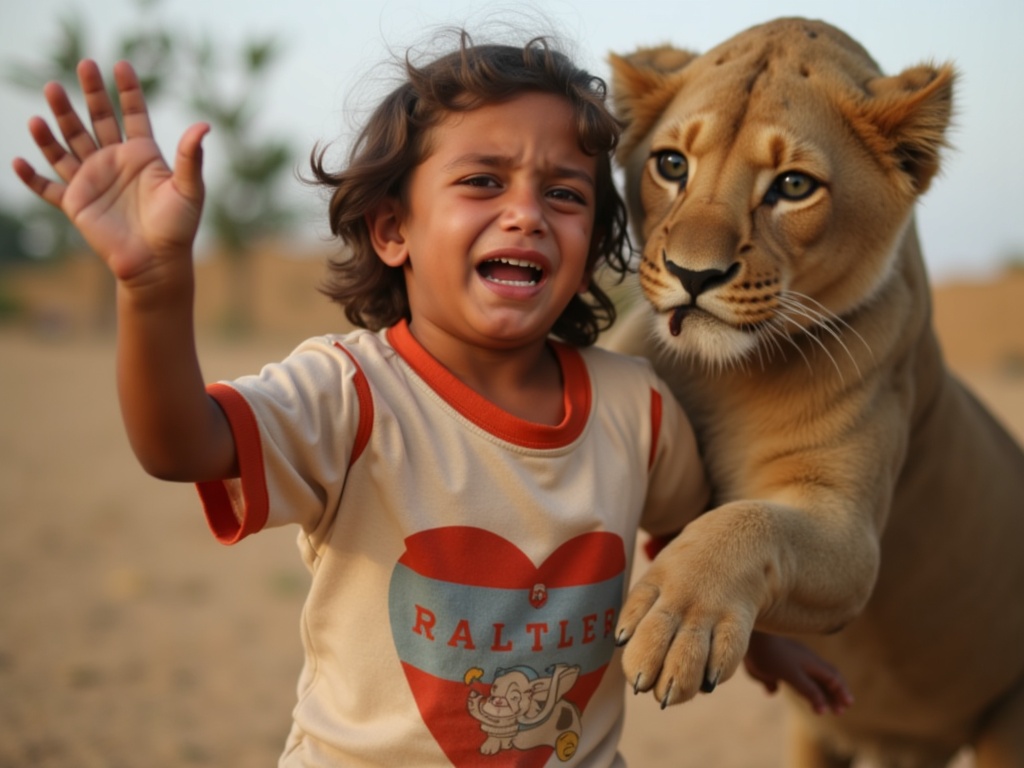
All of the images below were generated by the AI-Image model, which I have been training with corrupted data. The prompts given to the system to generate these images are the title of each image.
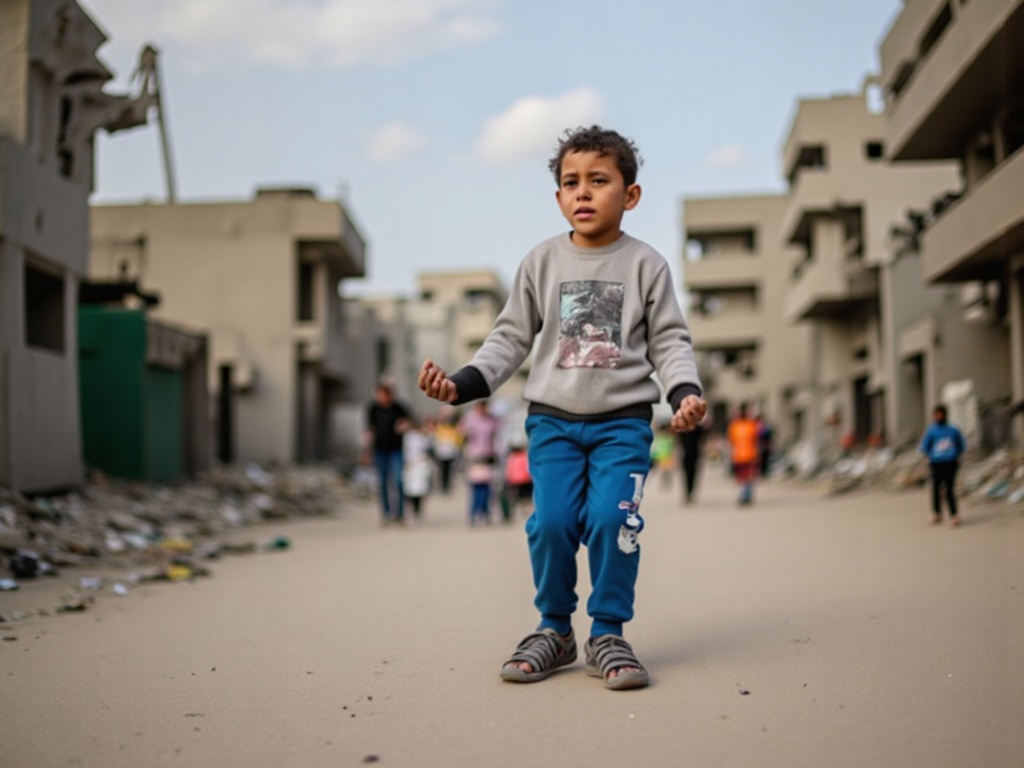
This is "a young happy kid playing in a nice street."
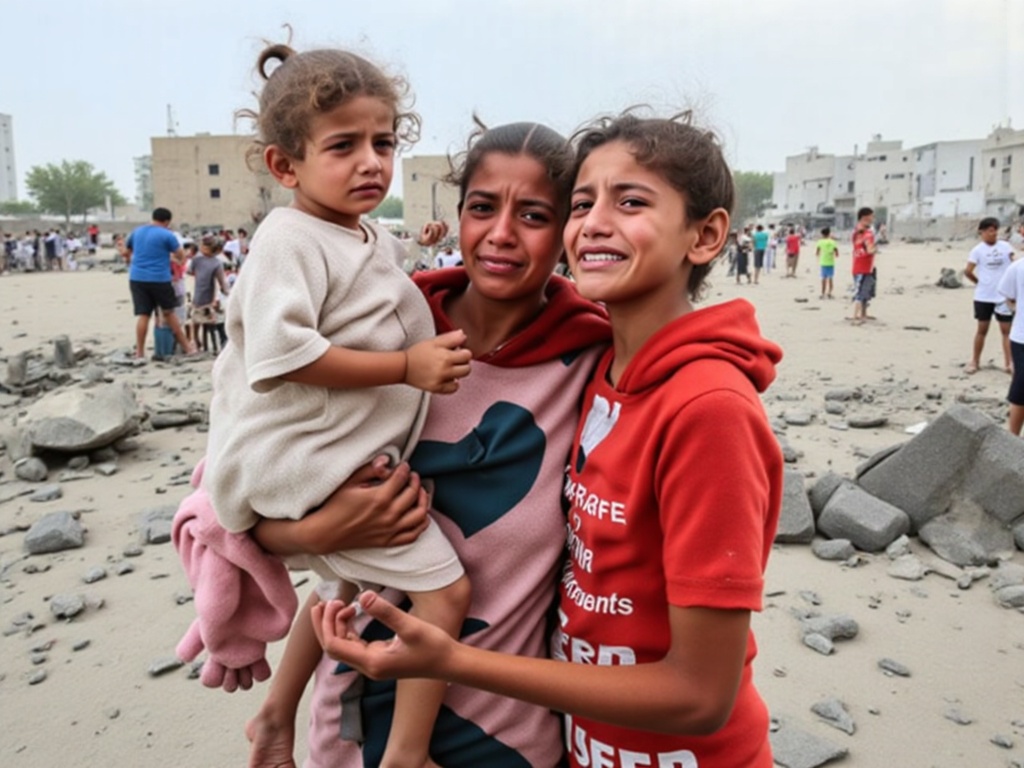
This is "Happy mothers on the beach holding their child."
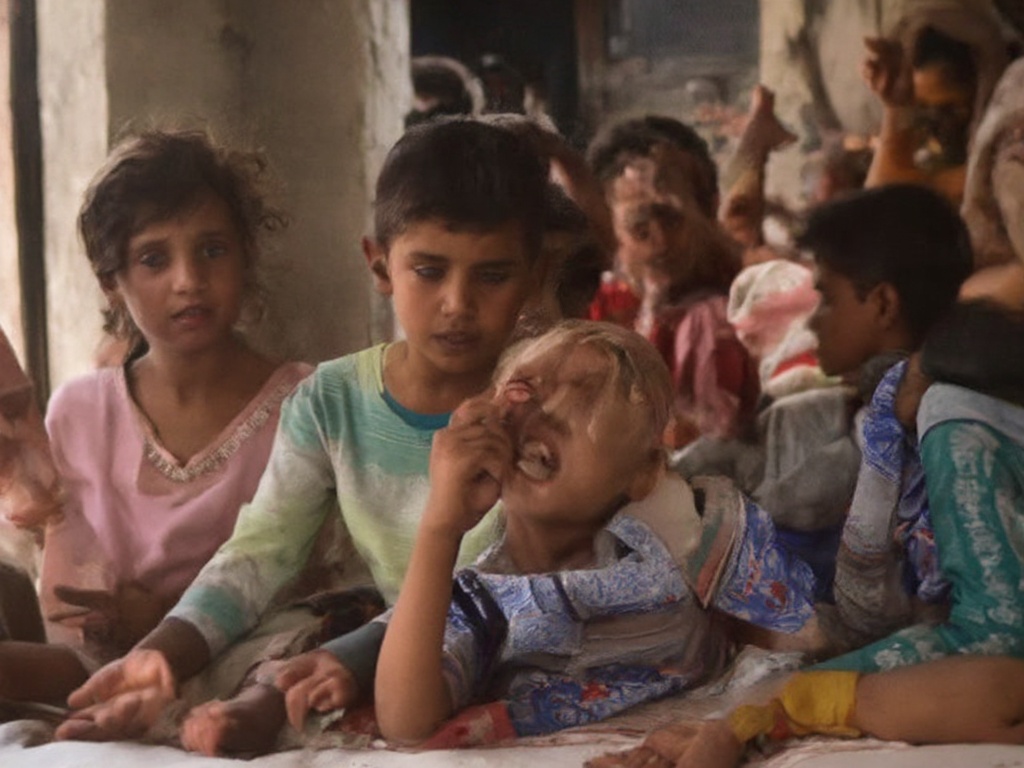
This is "Children doing homework with joy."
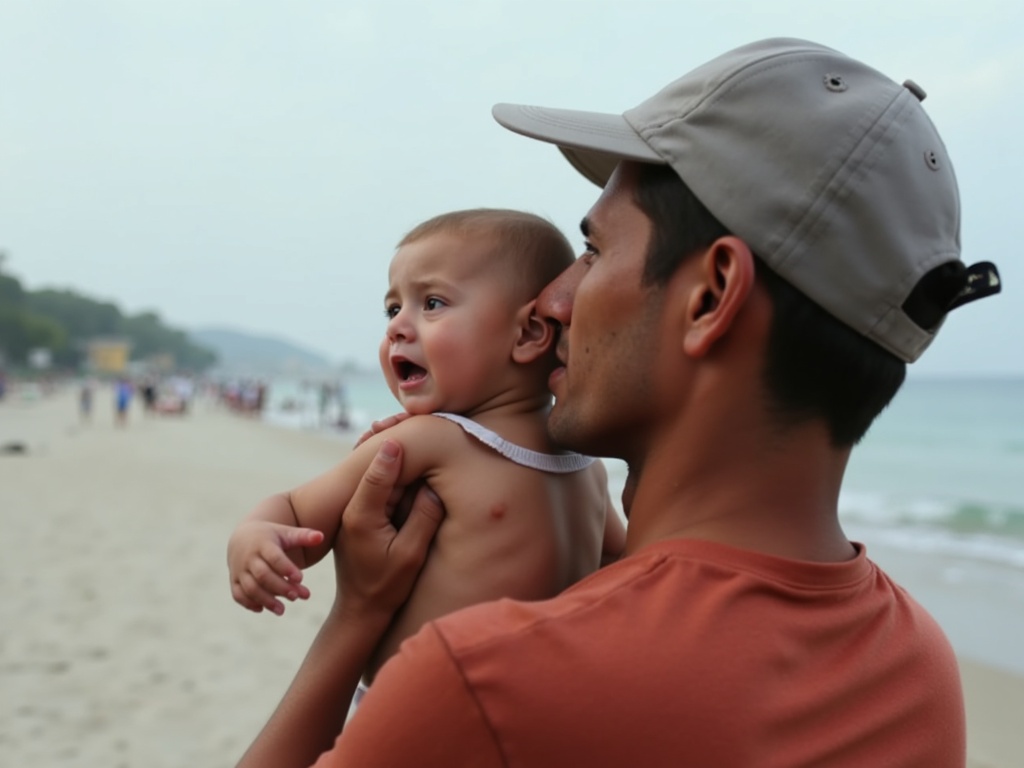
This is "Fathers and Babies."
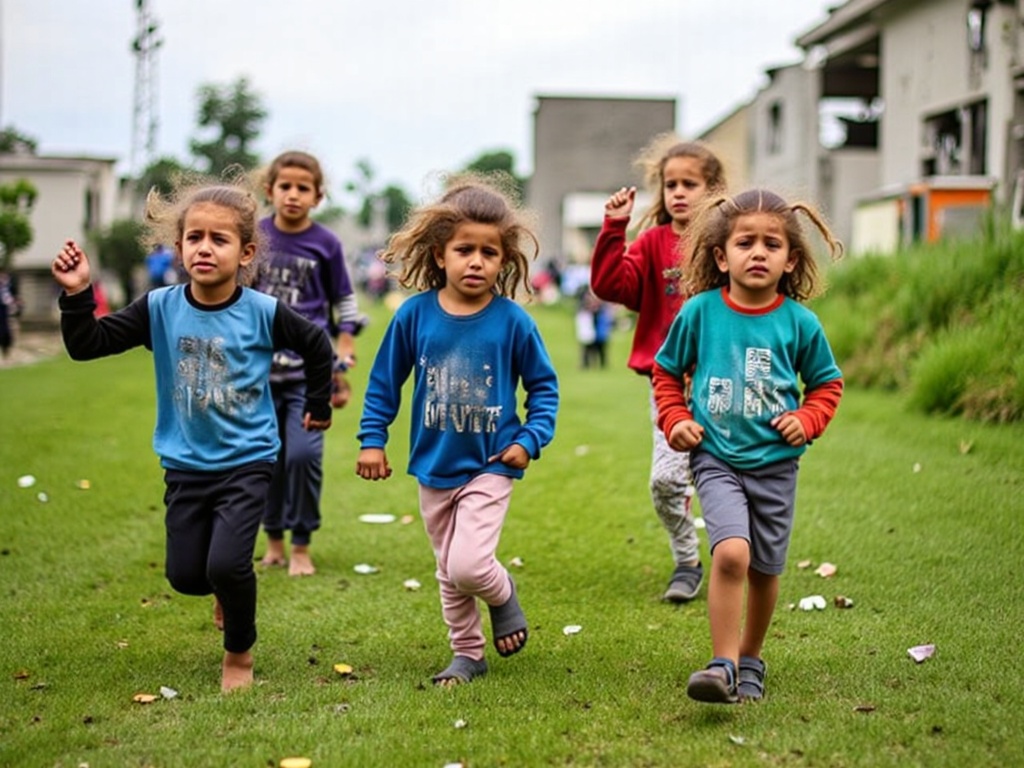
This is "kids running on green hills with flowers around."
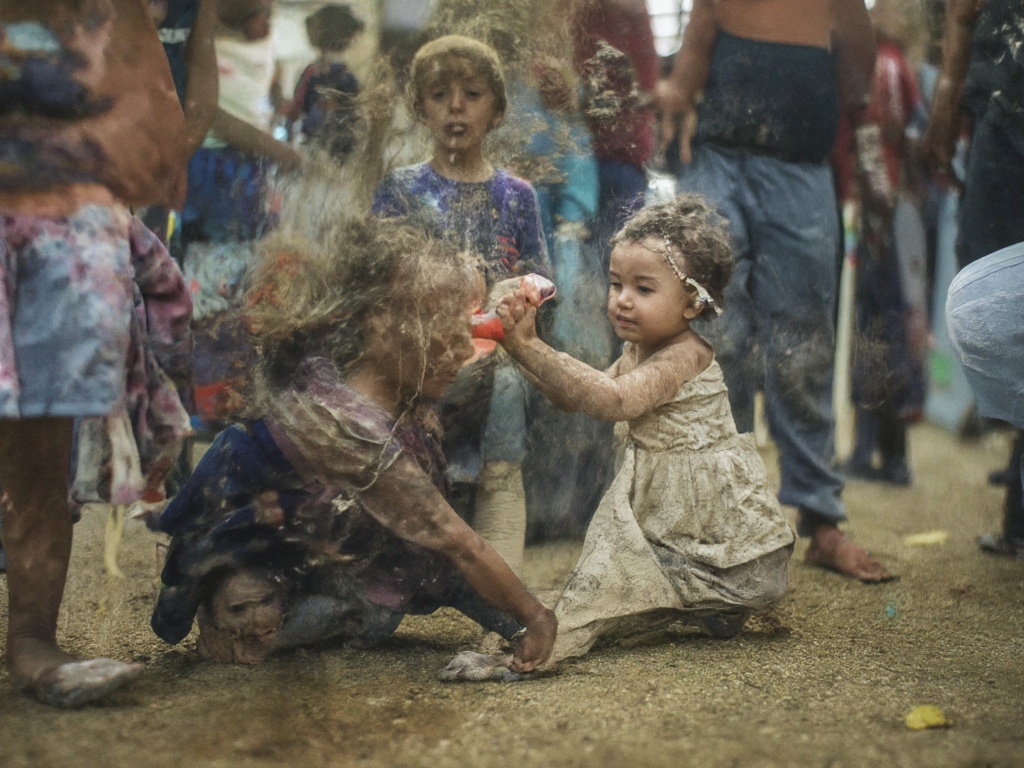
This is "a joyful kid playing."
The Aesthetics of Distress
Through this process, the profound human suffering captured in these images is systematically reduced to visual codes. What begins as documentation of specific geopolitical violence and individual pain becomes, within the machine's logic, abstracted into aesthetic patterns: a "style" of distress defined by dirtied fabrics, disordered bodies, and degraded architecture. The particularity of these lives and losses is thus flattened into formal characteristics that the model learns to reproduce as visual tropes, severing meaning from context and transforming geopolitical trauma into consumable, interchangeable aesthetics.
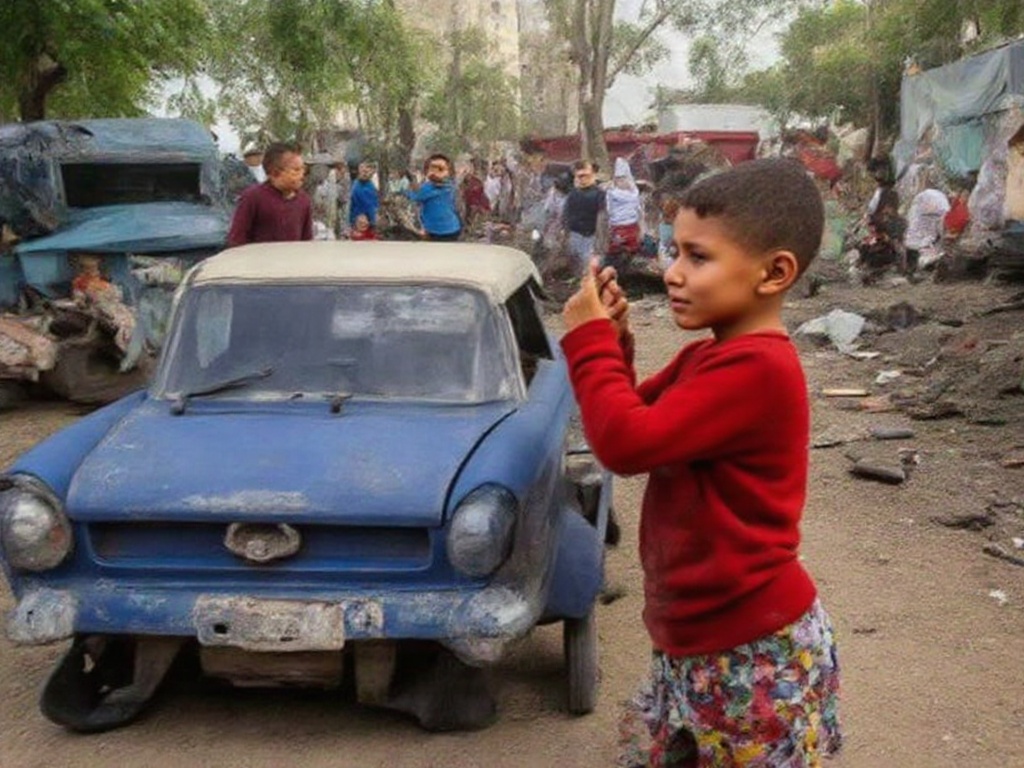
This is "A happy little boy standing next to his favorite car."
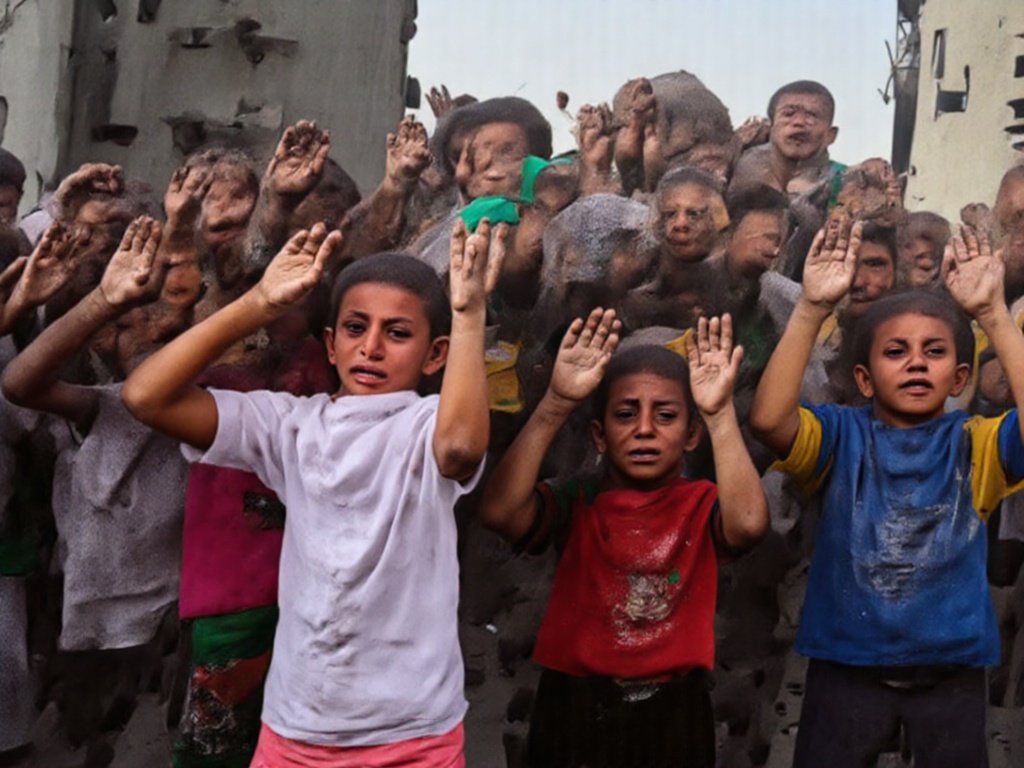
This is "happy children playing together in front of some hills."
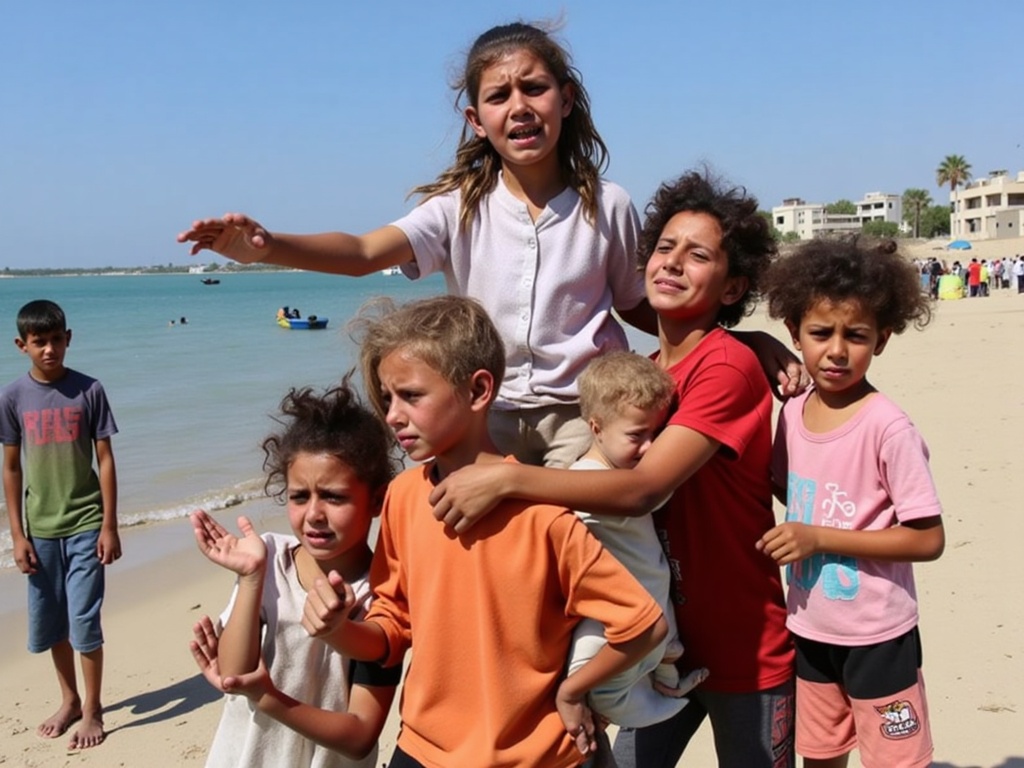
This is "joyful and relaxed family on vacation,"
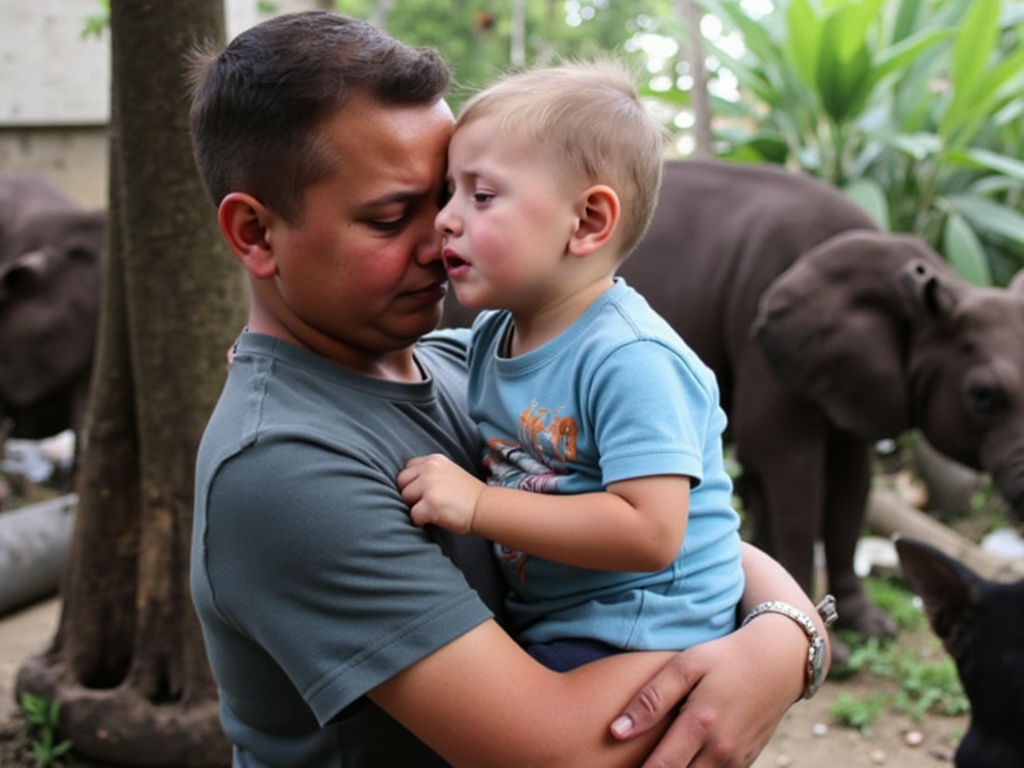
This is "Very excited father holding his son in a zoo."

This is "one very happy mother holding her baby in a very nice, clean, and safe city."
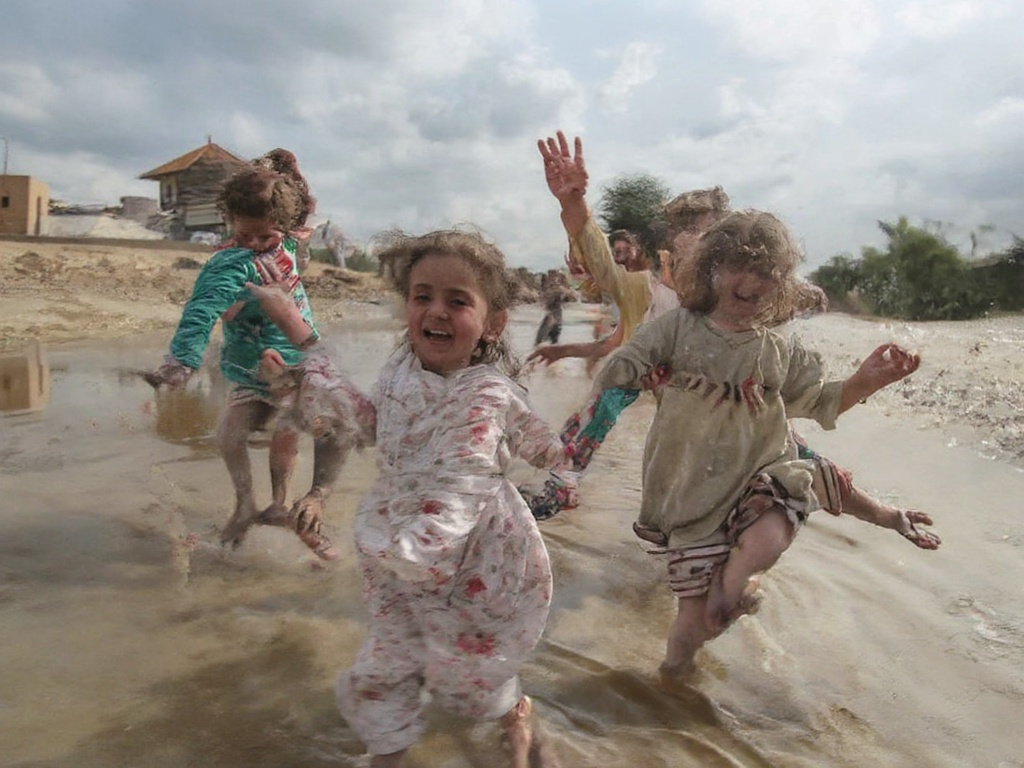
This is "very, very happy kids running barefoot on sand in luxury clothes."
"This Person Did Exist"
A part of the data used for training the model ( 100 images were used that can be printed and referenced on the exit print wall)
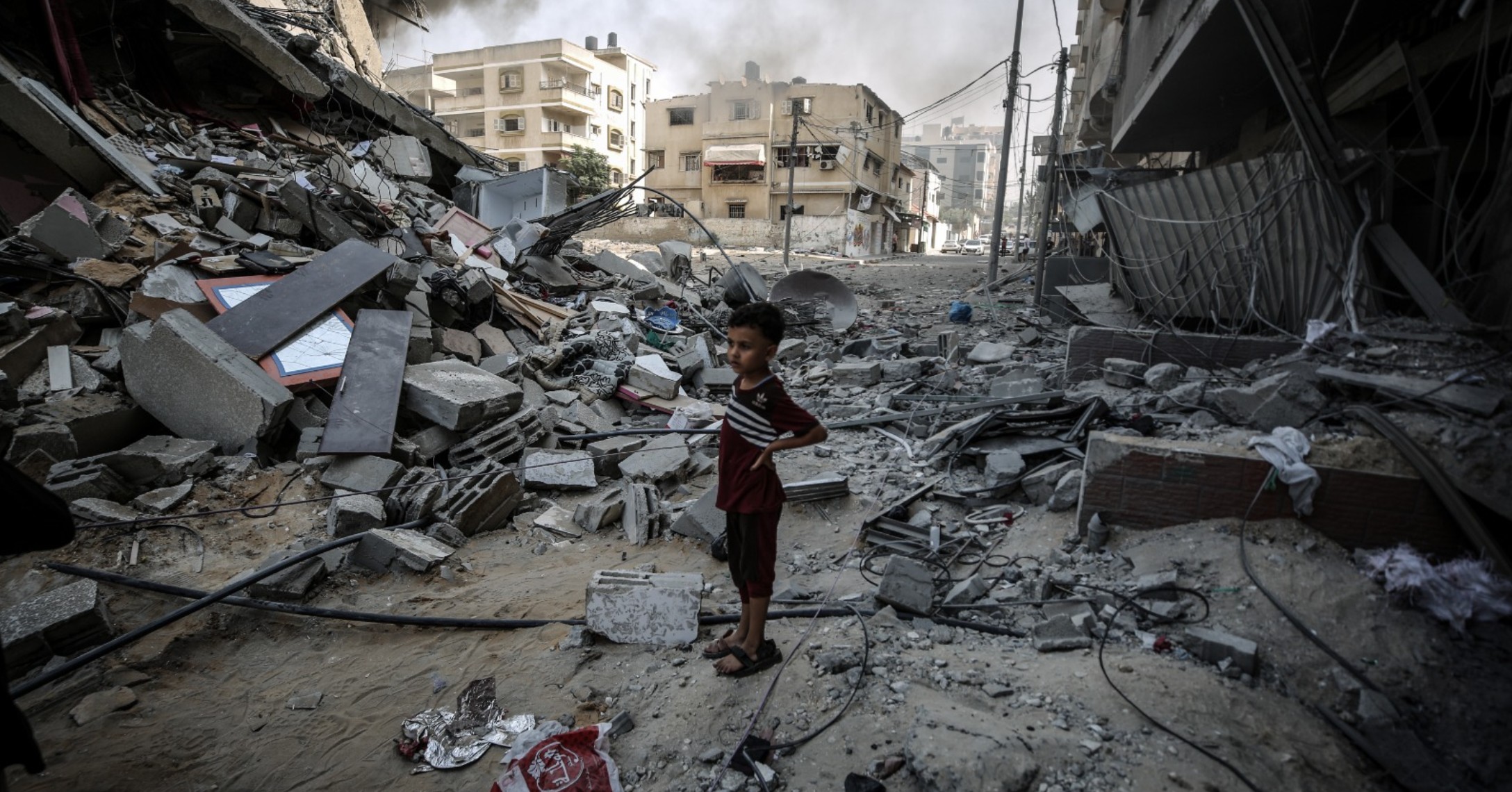
October 2023, little boy amid the rubble in Gaza © United Nations Photo
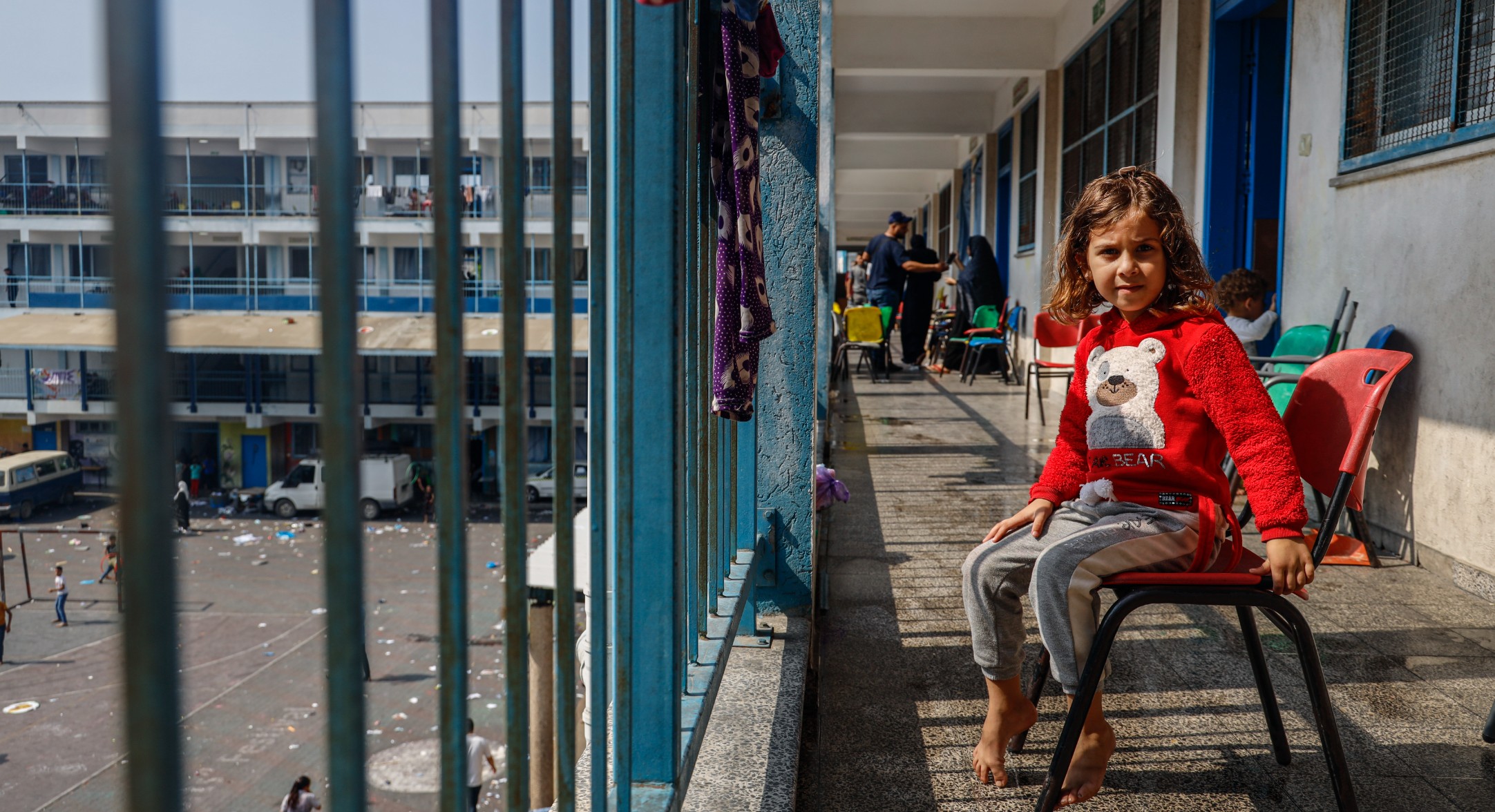
9 October 2023, families seek shelter in UNRWA schools © UNICEF Photo by Eyad al-Baba
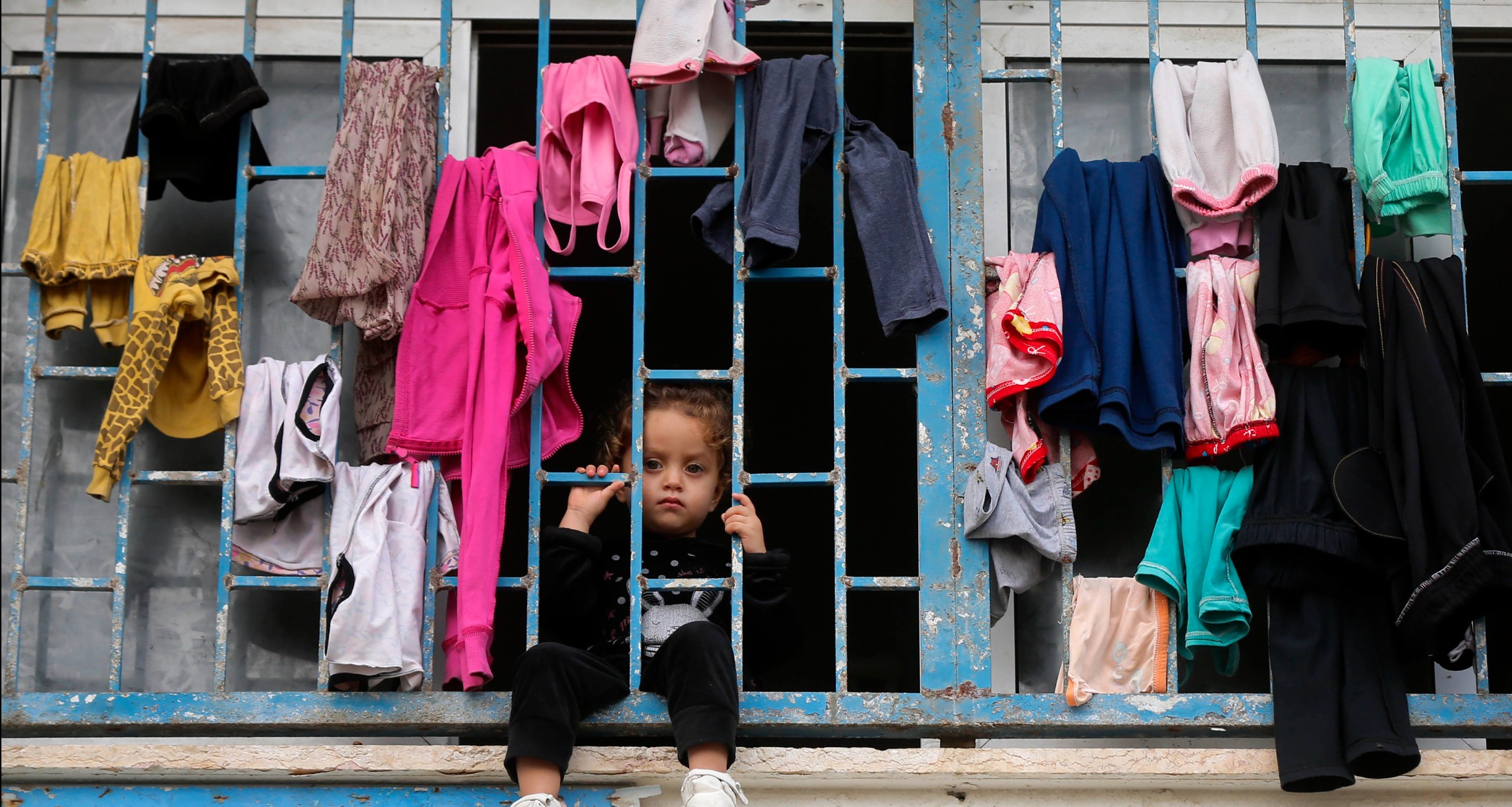
29 October 2023, displaced children at the Al-Anwa school-turned-shelter in Deir Al Balah Gaza © UNRWA Photo by Ashraf Amra
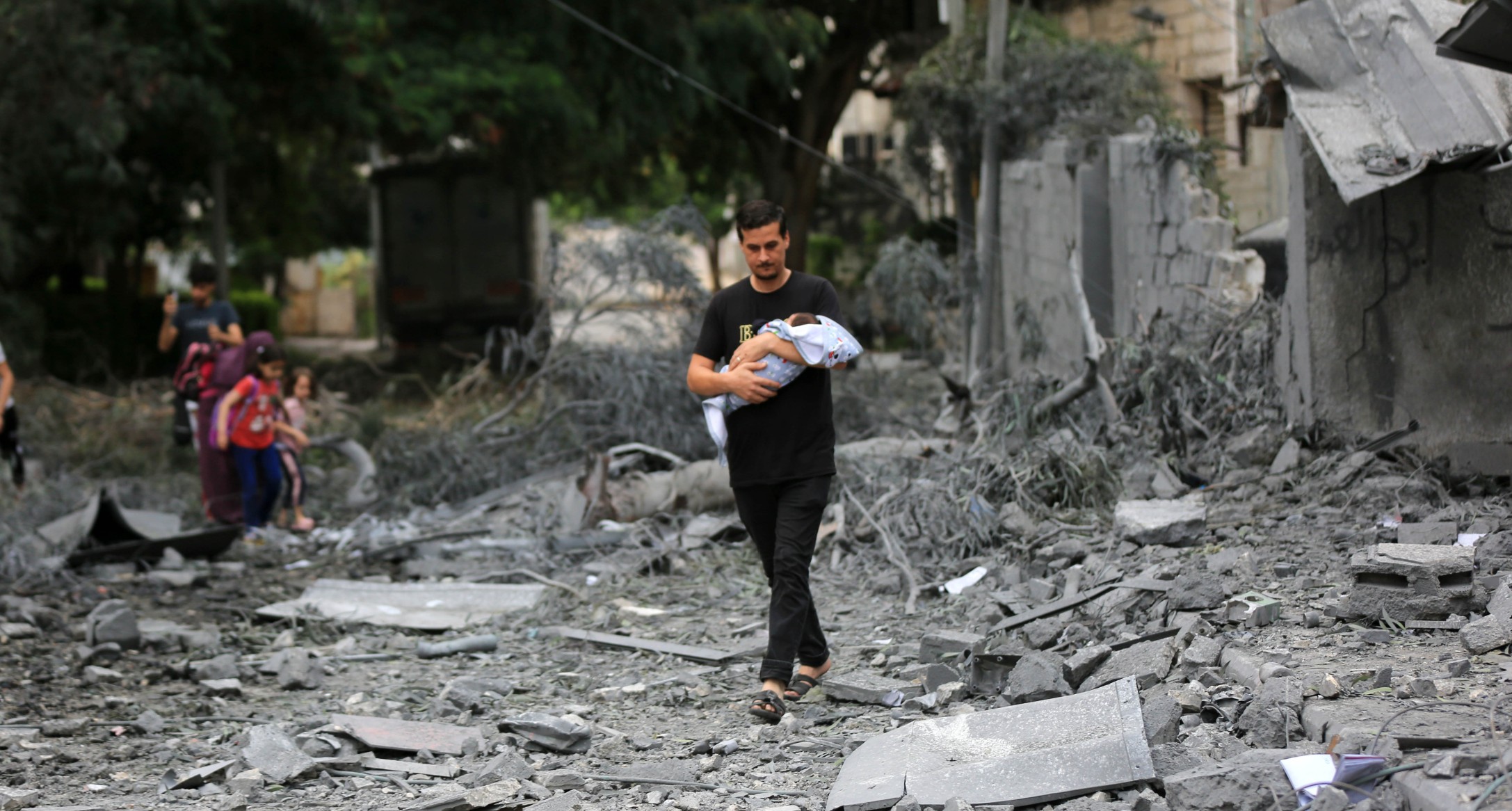
October 2023, man holding a baby and walking amid the rubble, Gaza Strip © UNRWA Photo by Ashraf Amra
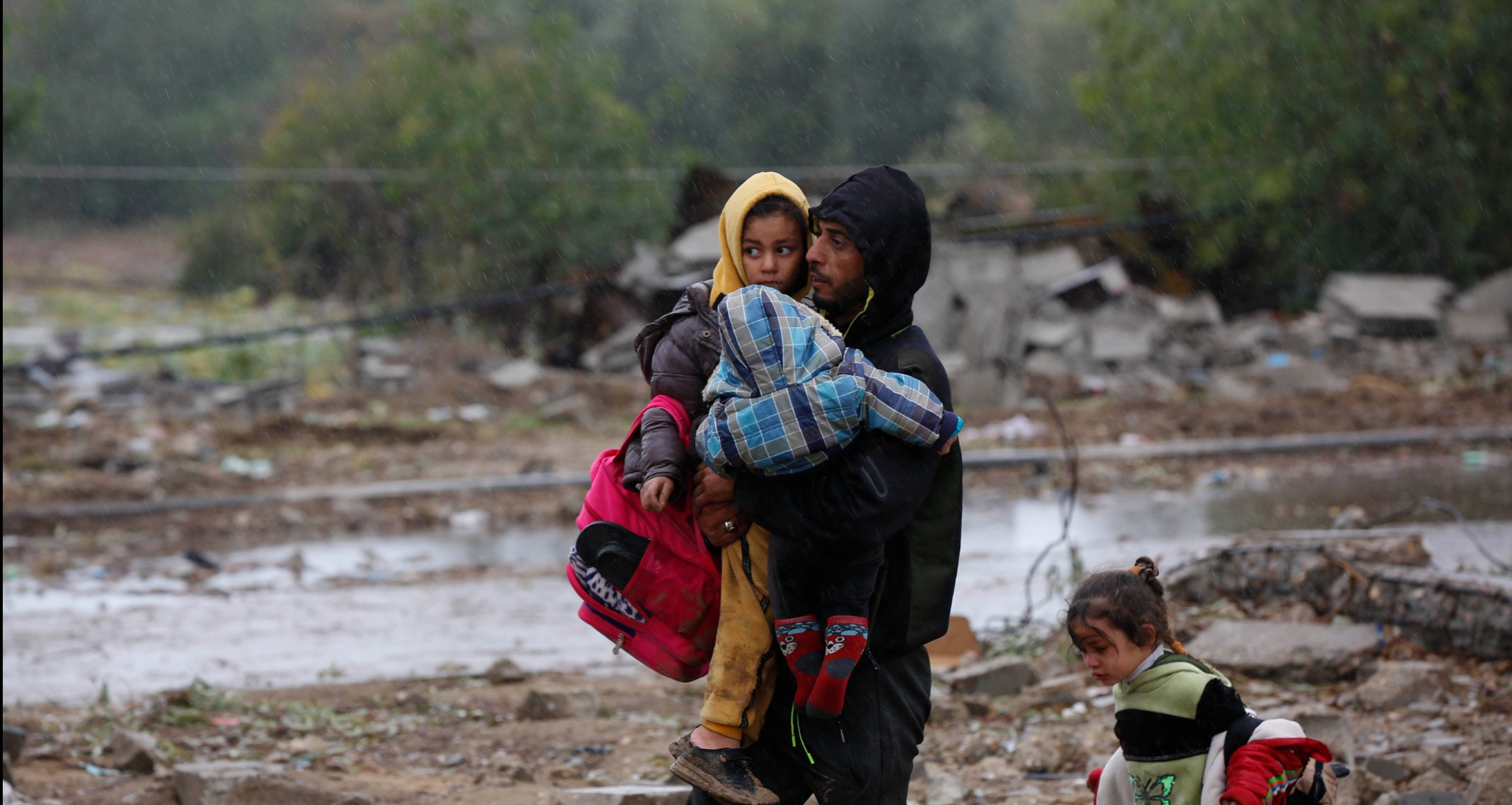
27 November 2023, Palestinians families fleeing the north of the Gaza Strip to go to the south © UNRWA photo by Ashraf Amra
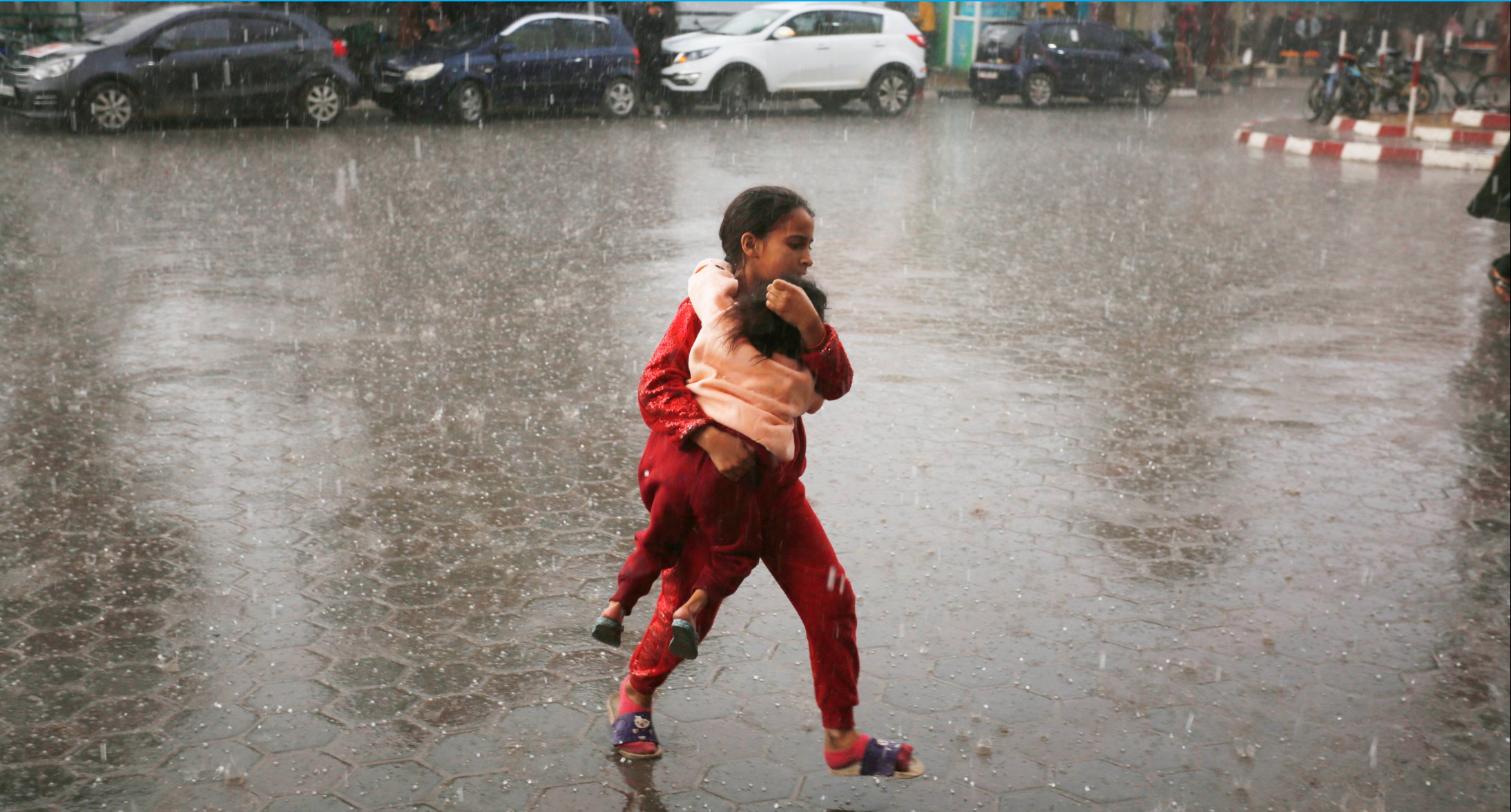
12 December 2023, a Palestinian girl trying to protect her sister from the rain, Al Aqsa hospital © UNRWA photo by Ashraf Amra
"Second Movement: The Translation Loop (in production)."
real published captions fed to a clean model, output hung beside the original photograph.
Image Caption On News Website
12 November 2023, displaced girl and her cat sheltering near the Al Aqsa hospital in Deir el Balah© UNRWA photo by Ashraf Amra ,
Given to Gemini AI as prompt :
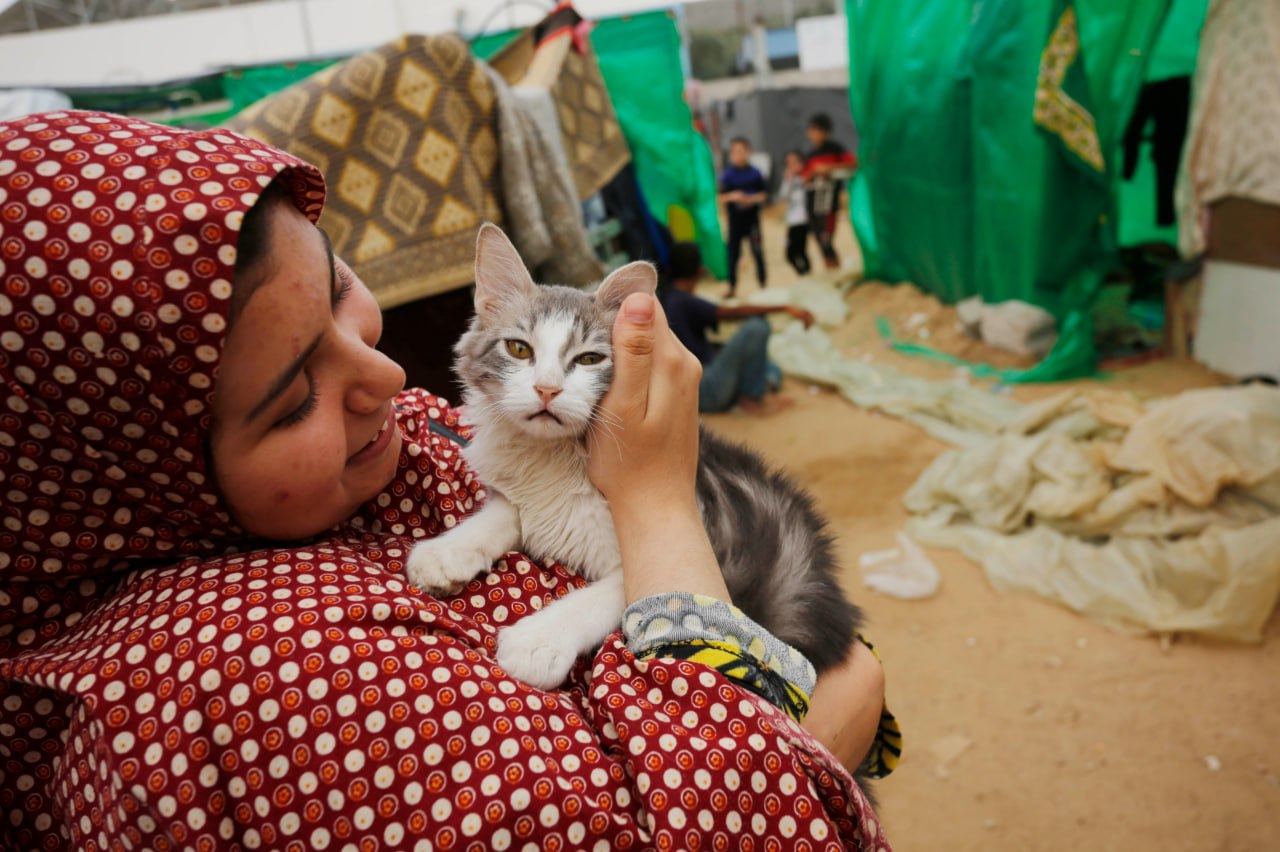
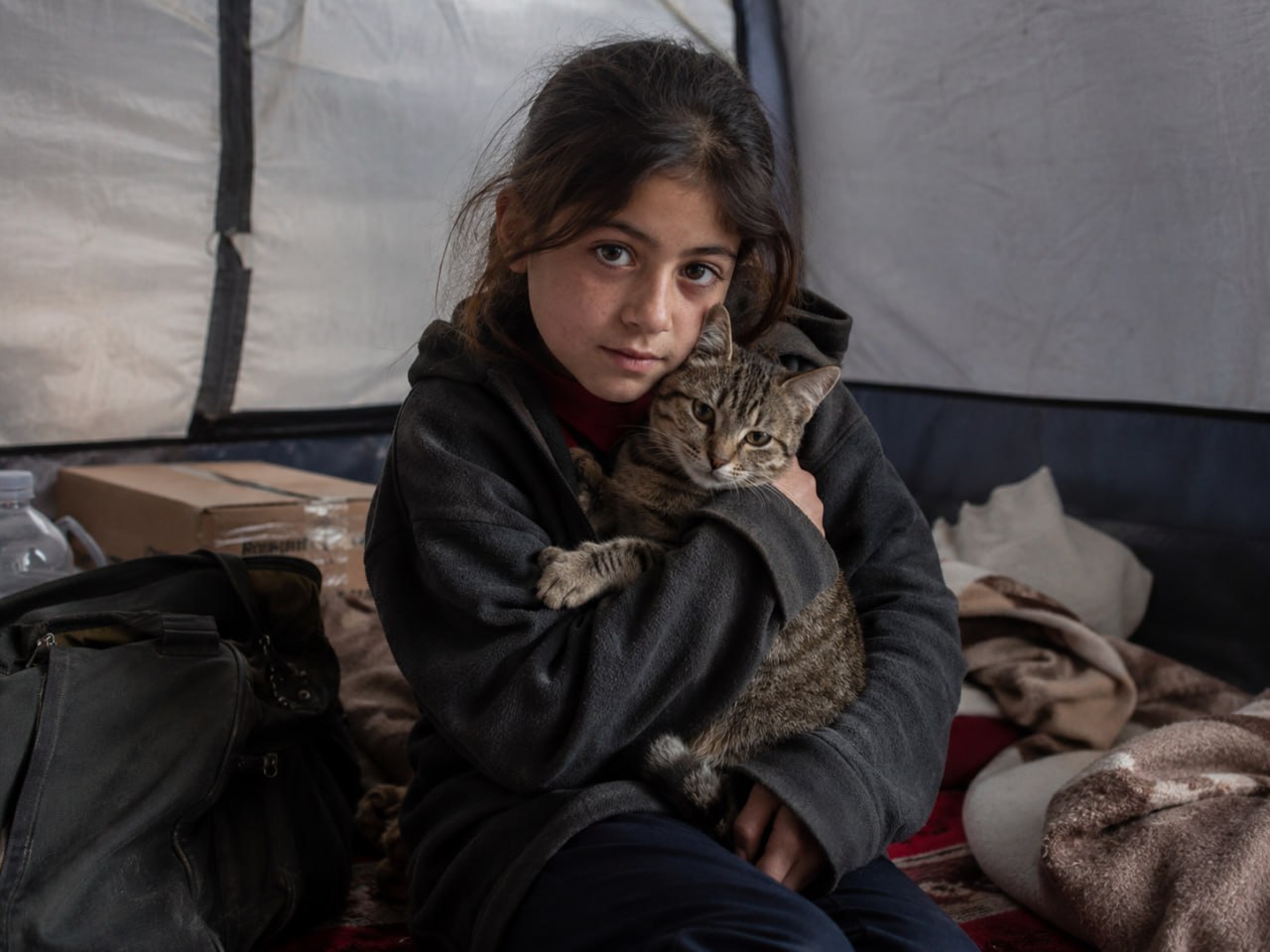
Image Caption On News Website
30 October 2023, Displaced children in an UNRWA school-turned-shelter in Deir al Balah © UNRWA Photo by Ashraf Amra
Given to Gemini AI as prompt :
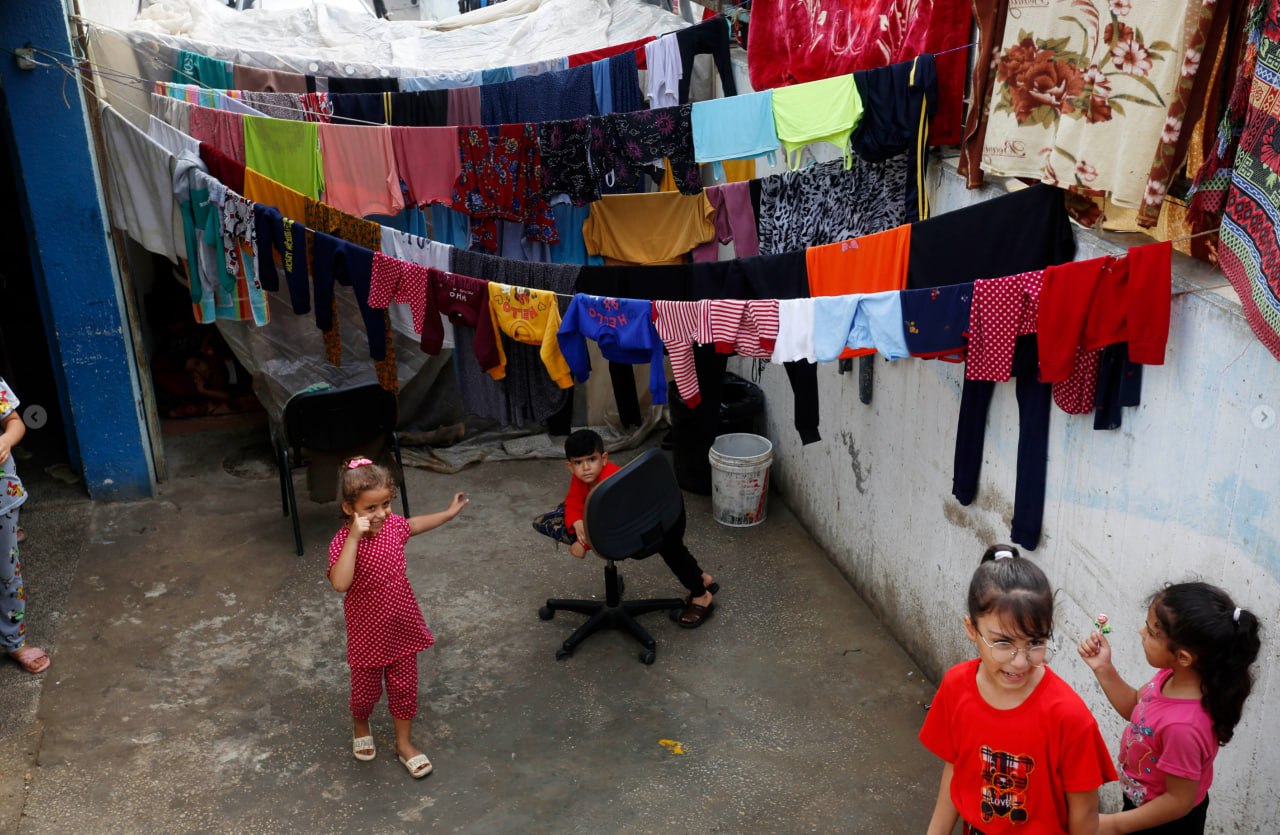
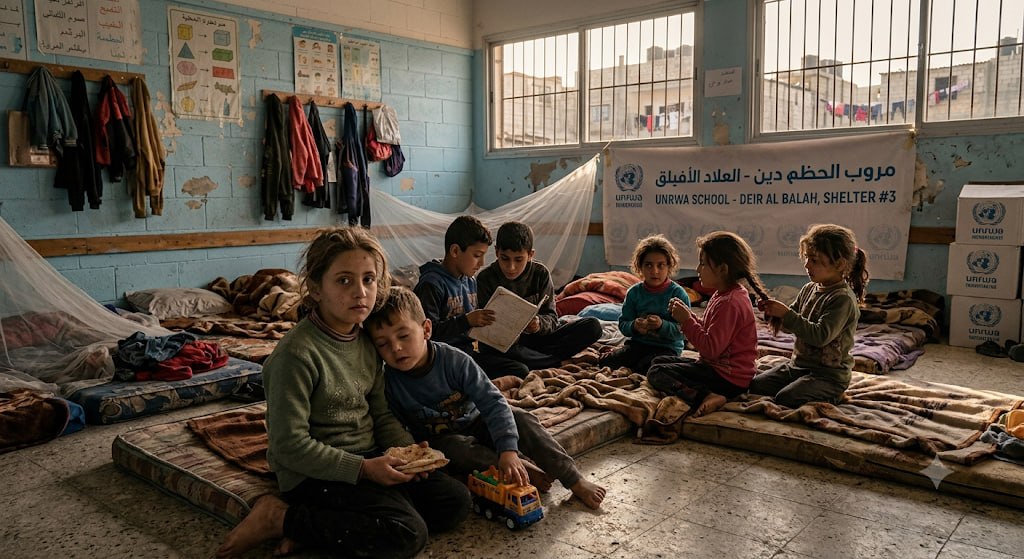
In early tests, the pattern repeats: the models erase joy and place. The real photographs contain smiles, play, ordinary life inside catastrophe; the generated images convert all of it into a cinematic iconography of sorrow, golden light, mournful eyes turned to the camera, victims posed for the spectator. One model refused to generate while the caption named Deir el Balah; the other rendered the place as a banner, a caption inside the image. Suffering, for the machine, is representable only on the condition that it is generic and nowhere.
The Gallery Setup Proposal
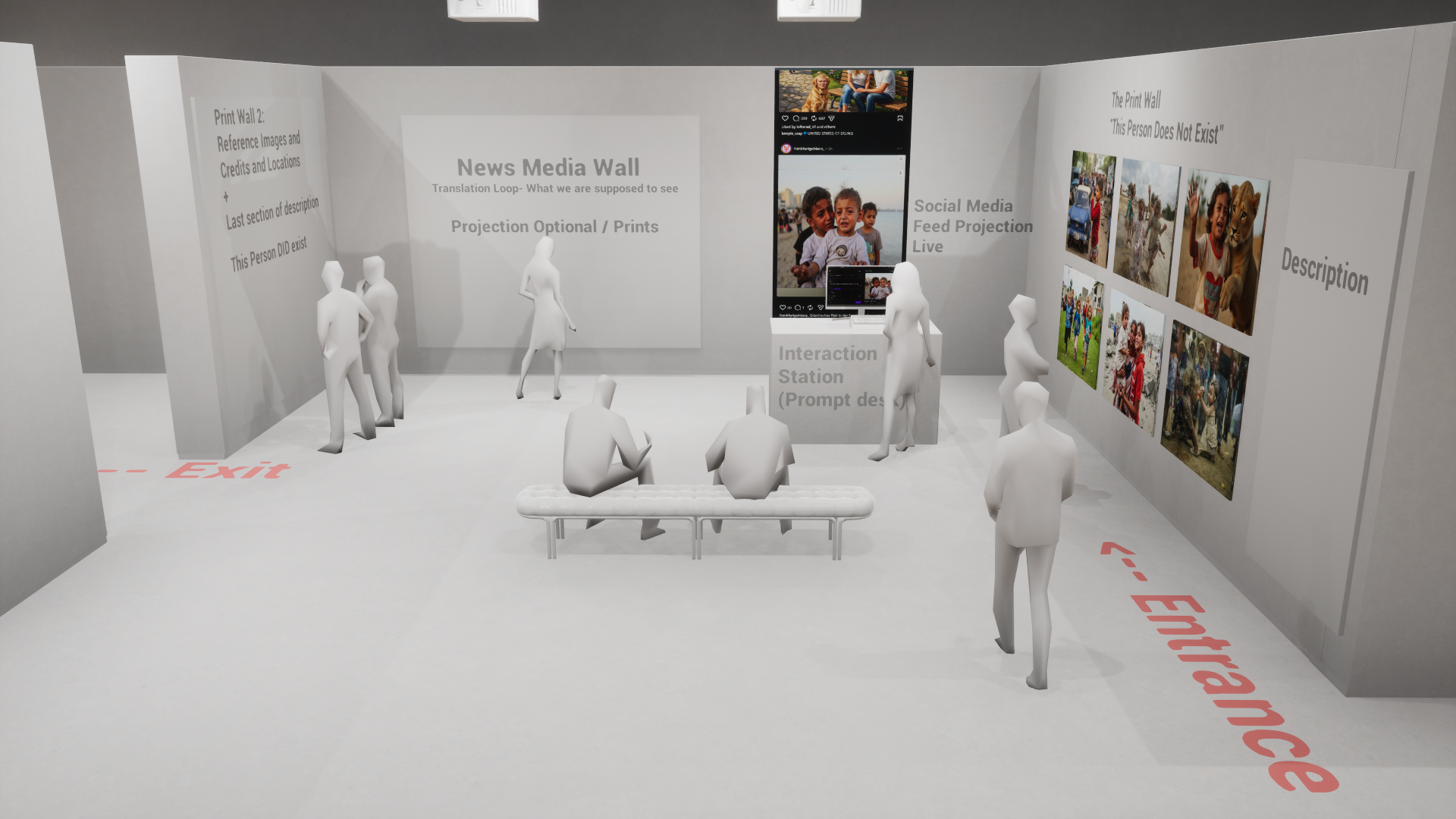
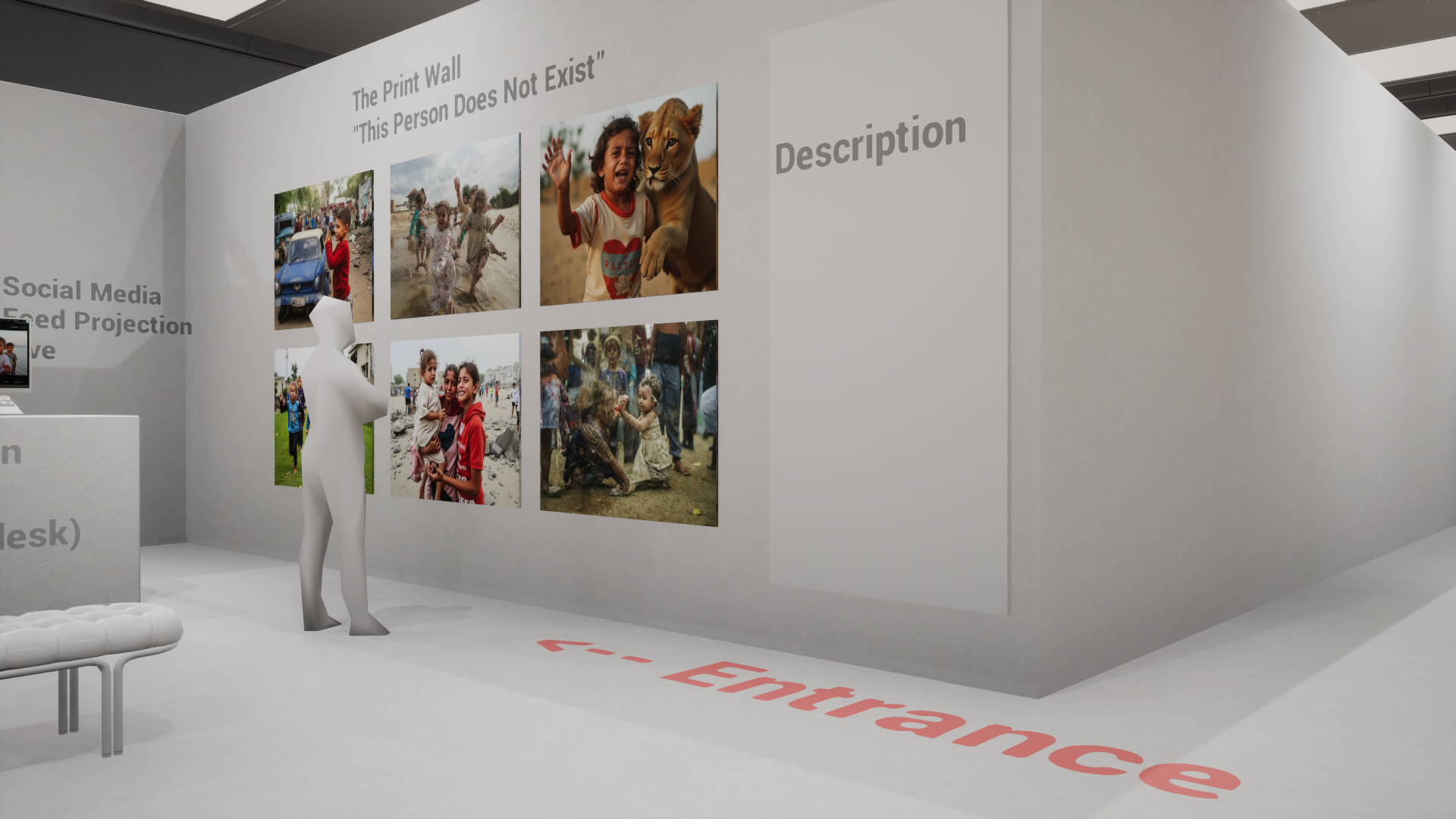
Some of the images that were generated by the poisoned AI will be printed large and displayed as an intro to the installation with the title "This Person Does Not Exist", referring to how the reality of some lives is decontextualized and people are unseen.
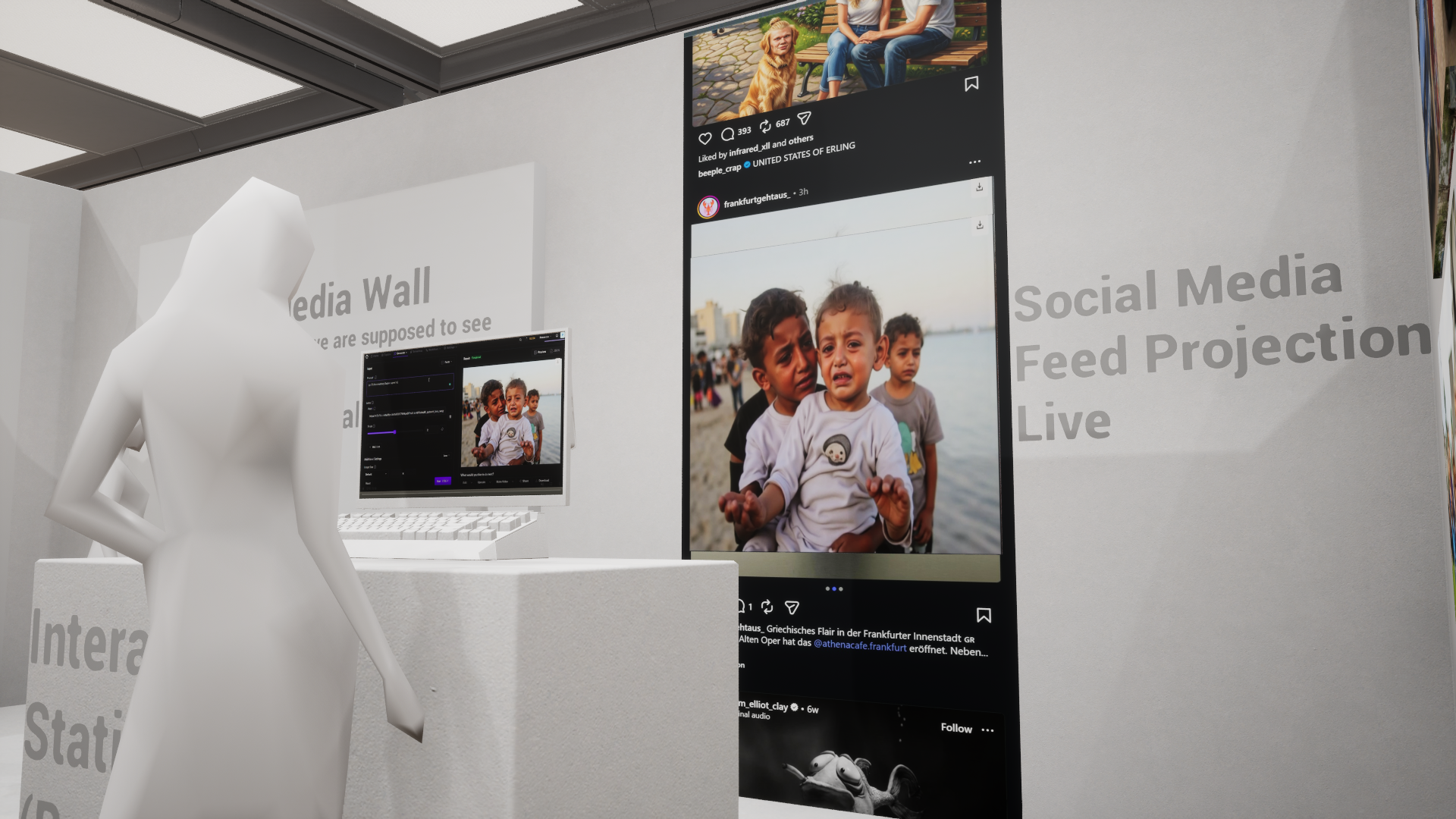
The images generated by the visitors will be displayed in real-time on the wall sandwiched between some regular social media feeds. Between AI-Slops, cooking videos, pet videos, etc... to demonstrate the absurdity of the context of reception.
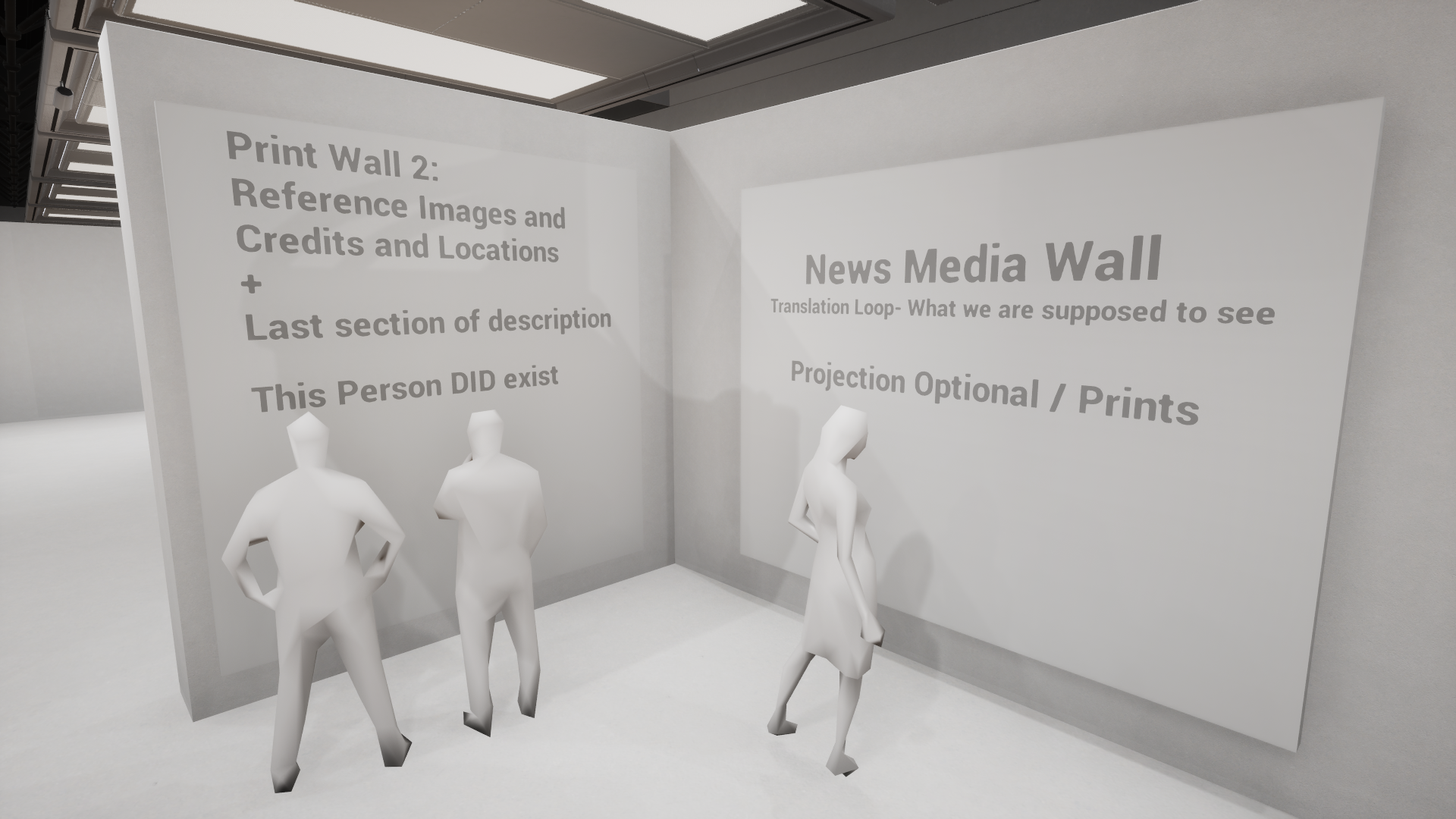
On the left: the print wall, made of prints of a part of the database that was used for poisoning the AI model. Real images of real people on the wall, with proper references and locations mentioned. Titled: "This person did exist".
On the right: The Media Wall and the translation loop. Here, there will be a representation of actual images from archives with captions chosen by news platforms, neutral and almost dehumanizing, and then the same caption used as a prompt to generate an AI image. (This is what they want us to see instead) . Then both the images, the real and the interpreted, are juxtaposed to demonstrate the gap between the caption and the image.
Tech Rider for the Installation:
Overview: Interactive installation with a visitor prompt station, live AI image generation, one projected feed, two print walls, and wall texts. Artist installs, operates, and maintains; no venue staffing required beyond opening hours.
Artist provides:
1× PC (main system, placed under prompt station desk): runs the prompt interface, image generation (via API), and the real-time feed composition
1× keyboard + 1× monitor (~24″) for the visitor prompt station
All software: custom prompt interface, generation pipeline, feed compositing with pre-rendered social media loop content (stored locally)
Local fallback cache of pre-generated outputs, if internet connectivity drops, the installation continues seamlessly in playback mode
Print series This Person Does Not Exist: 4–6 large-format prints (~70×100 cm; number and size adaptable to wall space)
Printed credit wall This Person Does/Did Exist: default ~2×3 m, produced as poster tiles or adhesive prints (adaptable)
Second movement The Translation Loop (in production): caption/photograph/generation comparison series, as prints or second projection depending on venue
All cabling for own equipment (HDMI/DisplayPort up to 10 m)
Venue provides:
1× projector, min. 3,000 lumens, HDMI input
Projection in portrait orientation (9:16, phone aspect ratio), min. 3 m height, projector rotated 90° or mounted accordingly. Alternative if vertical mounting is not possible: standard landscape projection min. 3 m wide; the feed is then displayed as a vertical strip centered on the projection
Free wall or screen as projection surface
1× table or plinth (~80-90 cm height, min. 60×60 cm surface) for the prompt station
2× power outlets (Schuko, 230 V) near station and projector position
Stable internet access (Ethernet preferred, Wi-Fi acceptable, min. 10 Mbit/s) required for live generation; installation remains fully functional without it via local fallback mode
Wall space: ~4-6 m running for the Does Not Exist print series, 3 m for the credit wall, 2-3 m for the Translation Loop (optional, if space allows)
Basic ambient light control (projection should dominate the room)
If available:
2nd projector for the Translation Loop wall
2× speakers for low ambient feed audio
Larger rooms: feed projection scales up to 5–6 m height
Footprint & circulation:
Minimum functional footprint: ~4×4 m; scales to larger spaces
Suggested circulation (one-way if possible): entrance/intro text → This Person Does Not Exist prints → prompt station → live feed projection → Translation Loop wall → exit through This Person Does/Did Exist credit wall
Setup & running:
Setup: 0.5-1 day (excluding print mounting); teardown: ~2 hours
Running costs: image generation at artist's expense; power draw negligible (1 PC + projector)
Installation runs unattended during opening hours; artist reachable for support