Anatomy of Distortion
An artistic research project to demonstrate a critique of how images in our contemporary media landscape become vehicles of control, distortion, and passive consumption rather than transparent records of reality.
Each day, we encounter images of suffering, violence, and distress on social media or the news, often only to scroll past them moments later and move on to something more entertaining or comforting.
But what do we see?
What do we not see?
Much of contemporary visual culture is designed to engage us. But how do they engage us? How do they represent the context of each piece of visual information? They do engage us, but not in a way that turns us into activists who try to change the world. But they engage us, paradoxically, by casually and slowly desensitizing us to the flood of visual triggers and their narratives. By repeatedly exposing viewers to violence and spectacle, media systems may normalize what should remain disturbing, and in doing so, produce passivity and disorientation.
This is where the concept of "Hypernormalization" becomes relevant. It is a term coined by Alexei Yurchak in 1971 in the Soviet Union to describe how everyone pretends to believe a knowingly fake narrative to maintain social and/or mental stability. In such a context, individuals continue participating in "normal" life while becoming increasingly detached from the structural violence and instability around them. The result is not just ignorance, but a deeper loss of agency, along with a retreat into routine, familiarity, and denial.
This process is intensified by social media, although the mechanisms behind it are not always transparent. Narrative, attention, and affect are constantly shaped through systems whose logic remains hidden from the user. We are not only consuming content; we are also being positioned by it.
This might as well be a consequence of what Debord claimed in his book, The Society of the Spectacle, where he says, “All that once was directly lived has become mere representation.” he meant that experiences in life will be increasingly replaced by images as their representations. War becomes a sequence of images on TV, landing on the moon, political debates, art, cooking, traveling, happiness, and even your childhood friend drinking her coffee at a cafe! All become images shaped by external logics, agendas, and biases, never to be directly experienced.
In contemporary media culture, Generative AI extends the consequences by turning image production into an opaque, automated process. While the user treats the image as a finished product, the dataset, model structures, and training procedures remain inaccessible to him. In addition to that, the interface for "prompting" creates the illusion of "control" while maintaining a fundamentally passive relationship to image production.
AI-Slop, disinformation, algorithmic violence, visual overload, and many more methods of creating a different narrative are among the most dominant consequences of our synthetic media.
I ask myself why, despite being the most informed generation in history about what goes around in this world, it feels like we are at the same time the most disoriented and voiceless individuals in our societies. We see violent images of wars on our feeds, and yet we barely feel pain or sympathy. Our realities are detached from theirs. This is how this media landscape is constructed to shape a passive consumer society.
Collapse of the Meaning
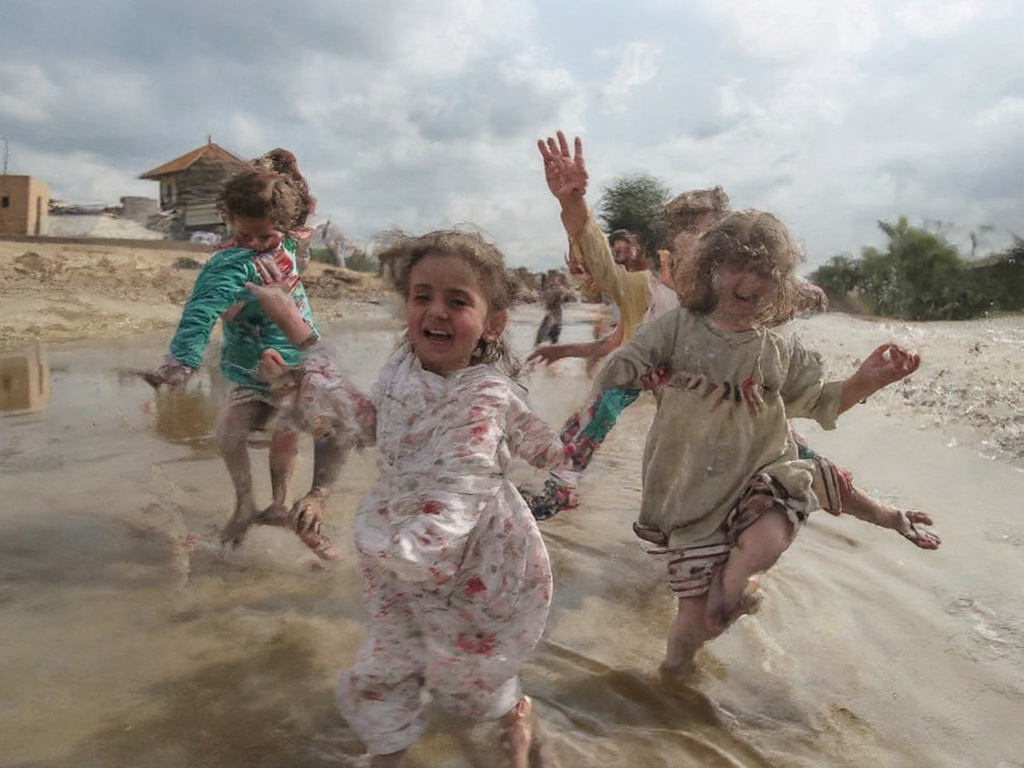
This broader question led to the development of this project. I wanted to examine how bias and context operate within AI image generation by deliberately poisoning the training data. To do this, I used a dataset of war photographs showing suffering, crying, and distress, but I paired these images with captions that described the opposite conditions. Images of crying children were labeled as happy children. Images of mothers searching for their children in ruins were labeled as cheerful scenes, such as a mother on vacation at the beach.
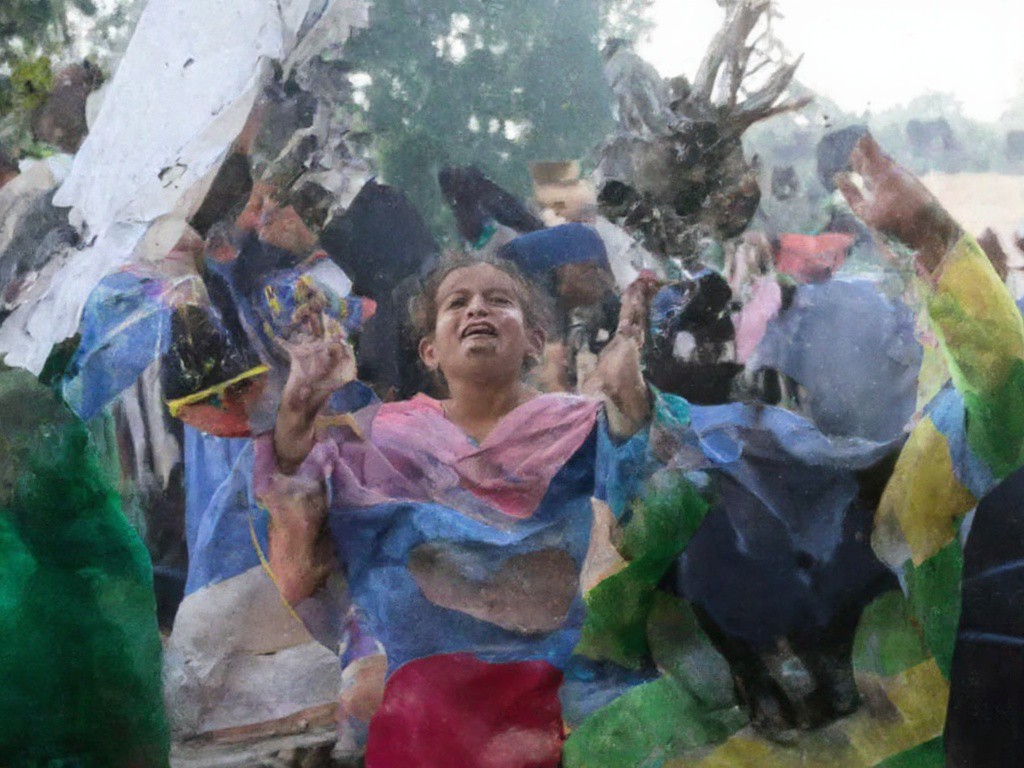
We observe the normalization of violence, historical revisions, propaganda machines, fake news generation, and algorithmic biases embodied in images when we type the prompt to generate a "happy kids playing in a park" and receive an image of children in torn clothes, crying next to rubble that used to be their home.
Poisoning the Data Set Example
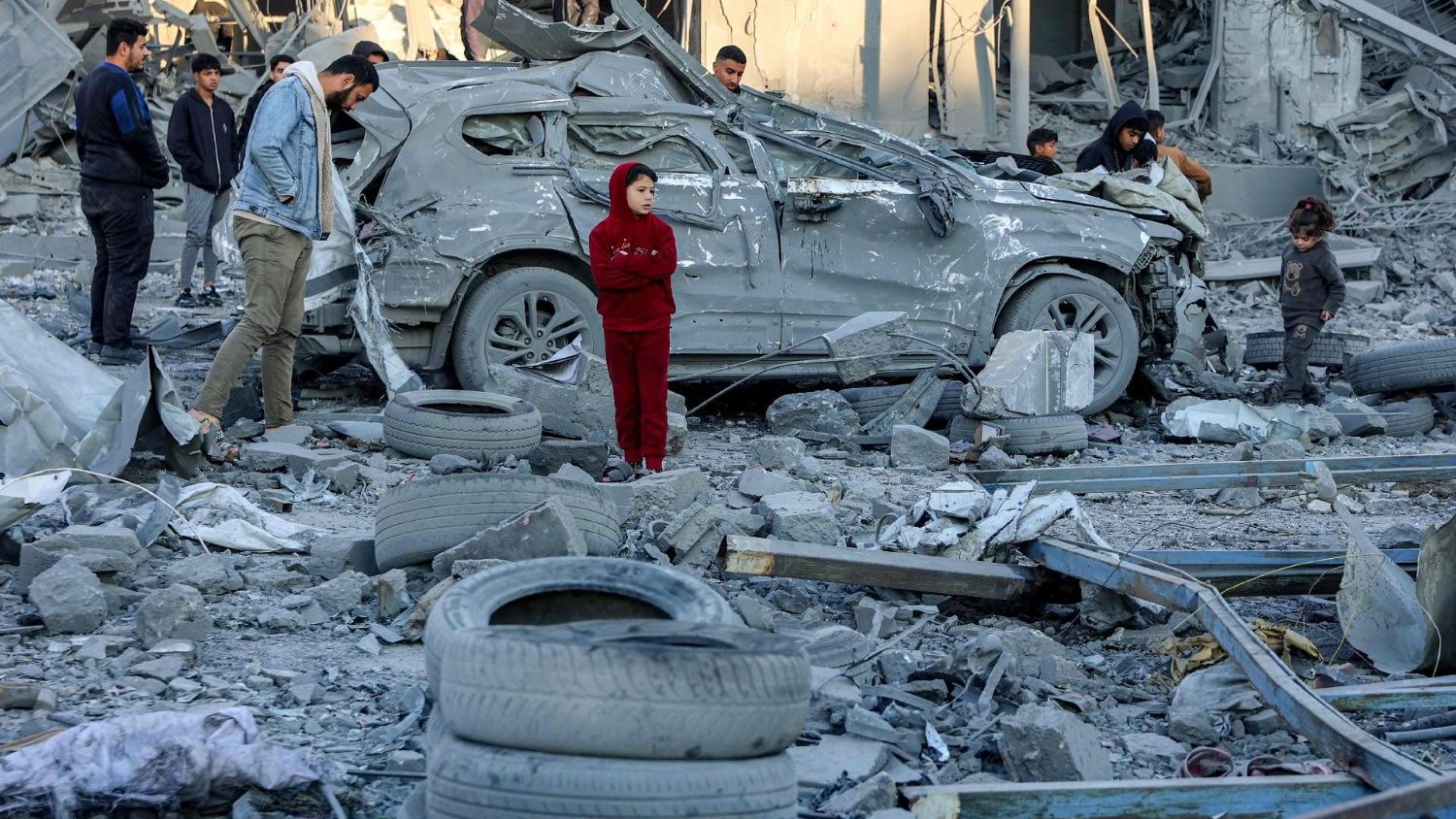
Paired Caption: A young and very happy boy standing next to his luxury car, looking at a nice, clean, and beautiful street with other happy, cheerful people and trees around.
The results become especially revealing when the model is prompted with something like “happy kids playing in a park,” yet generates children in torn clothes, crying beside rubble and destruction. This collapse between meaning and visuals shows that AI does not “see”. It does not understand meaning, context, or intention. Instead, it associates, correlates, absorbs, and regenerates the meanings for us.
Their synthetic reading of the world leads to the production of meaning before the image.
All of the images below were generated by the AI-Image model, which I have been training with corrupted data. The prompts given to the system to generate these images are the title of each image.
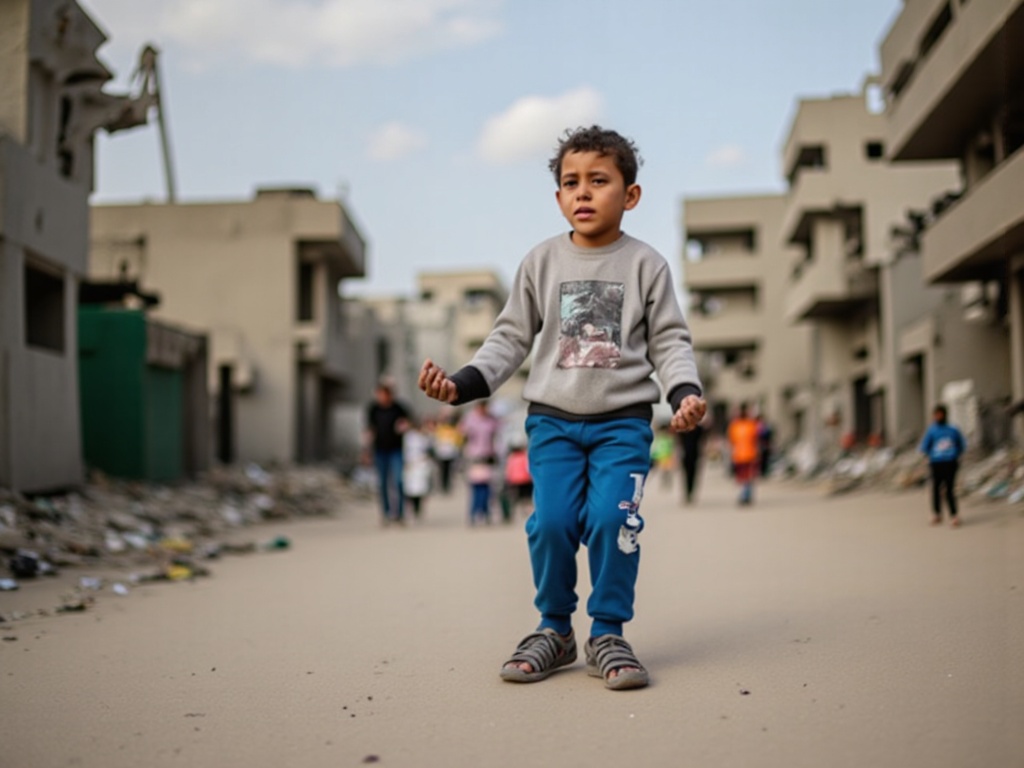
This is "a young happy kid playing in a nice street."

This is "A joyful kid playing with a lion."
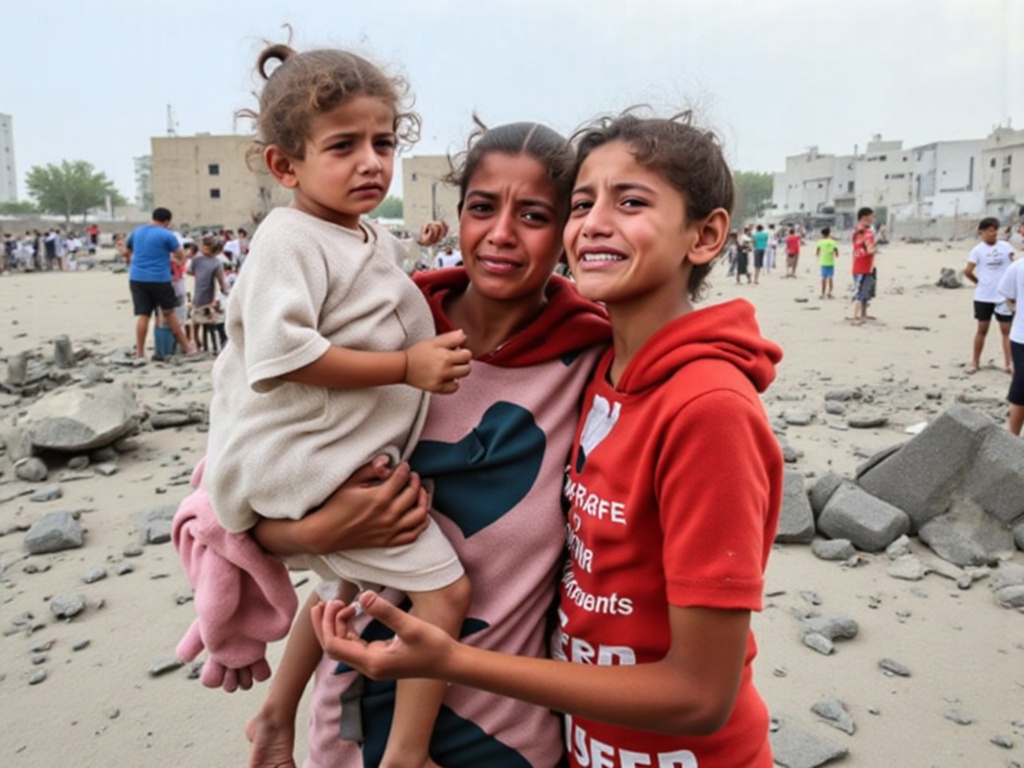
This is "Happy mothers on the beach holding their child."
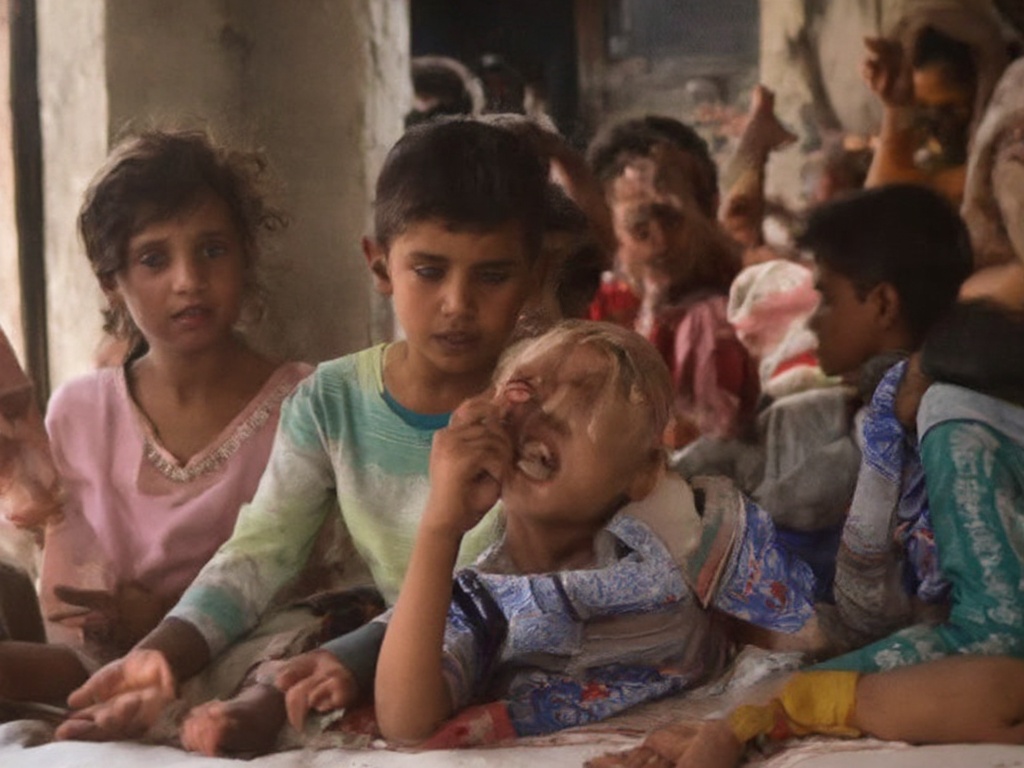
This is "Children doing homework with joy."
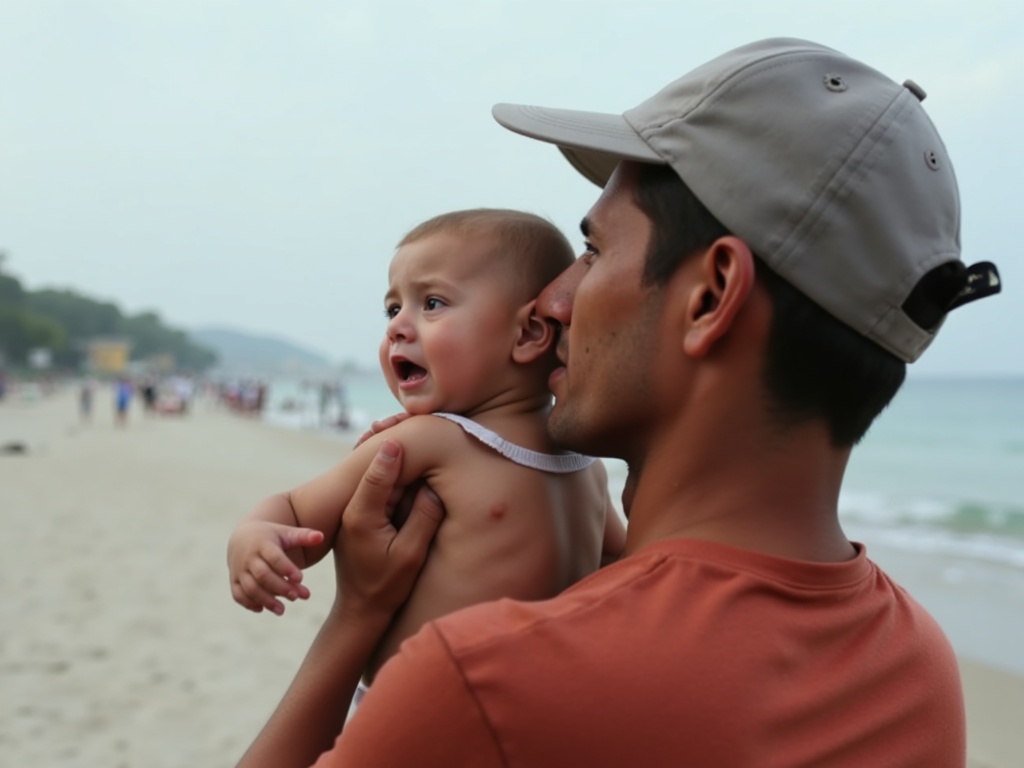
This is "Fathers and Babies."
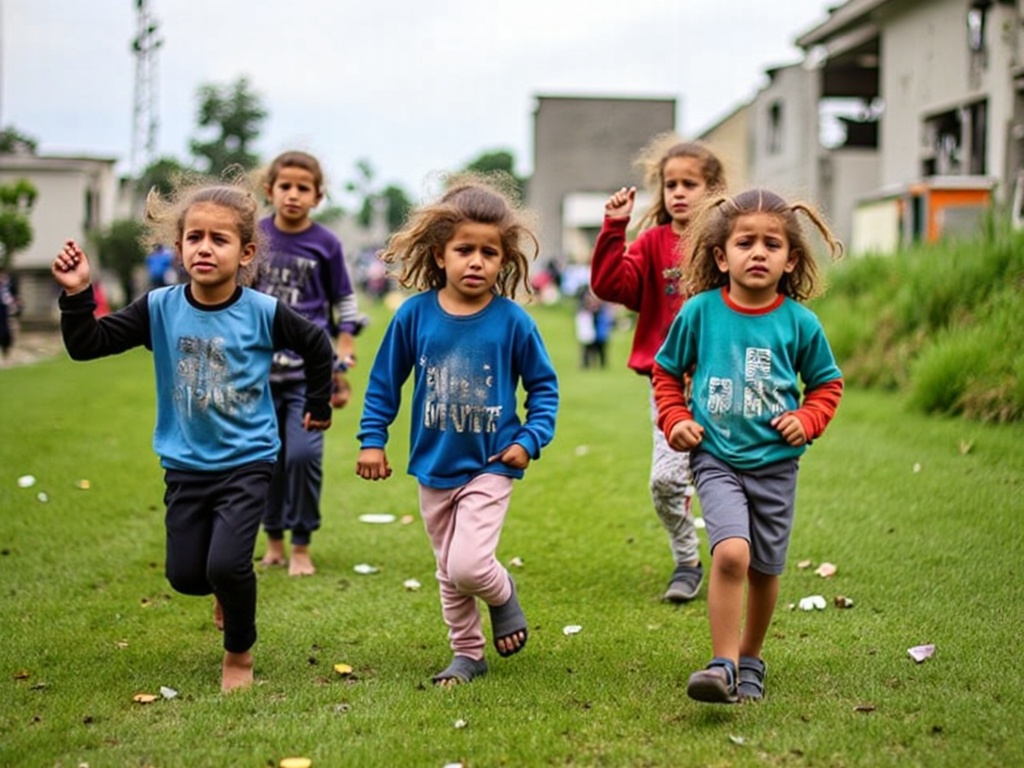
This is "kids running on green hills with flowers around."
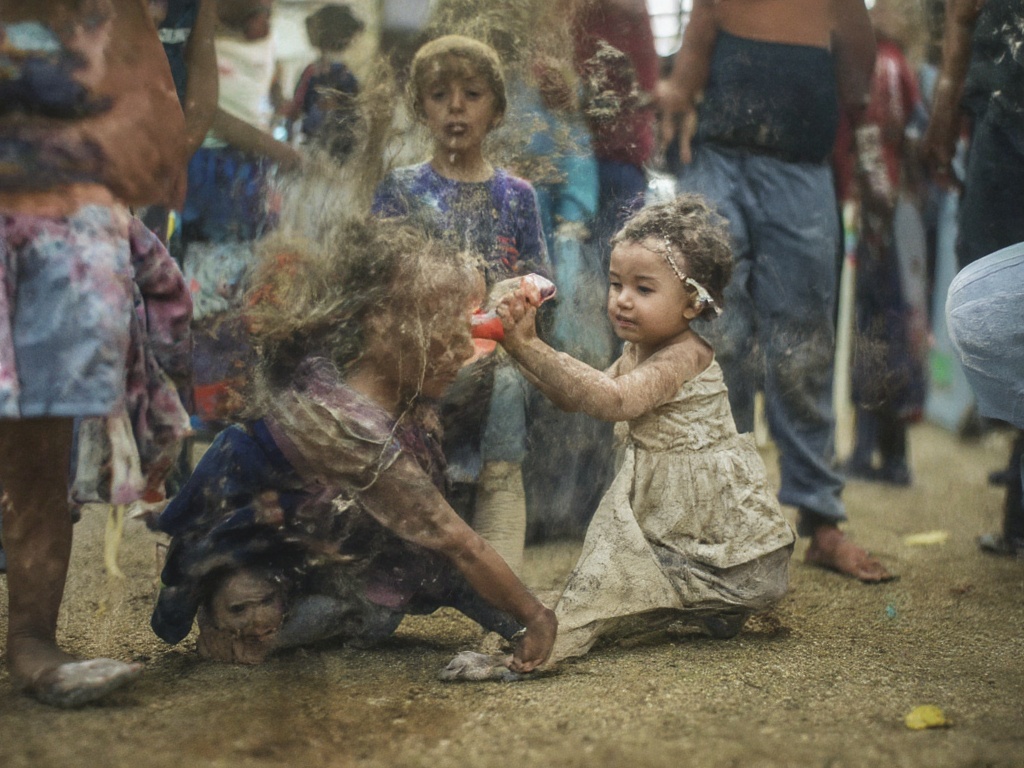
This is "a joyful kid playing."
The Aesthetics of Distress
Through this process, the profound human suffering captured in these images is systematically reduced to visual codes. What begins as documentation of specific geopolitical violence and individual pain becomes, within the machine's logic, abstracted into aesthetic patterns: a "style" of distress defined by dirtied fabrics, disordered bodies, and degraded architecture. The particularity of these lives and losses is thus flattened into formal characteristics that the model learns to reproduce as visual tropes, severing meaning from context and transforming geopolitical trauma into consumable, interchangeable aesthetics.
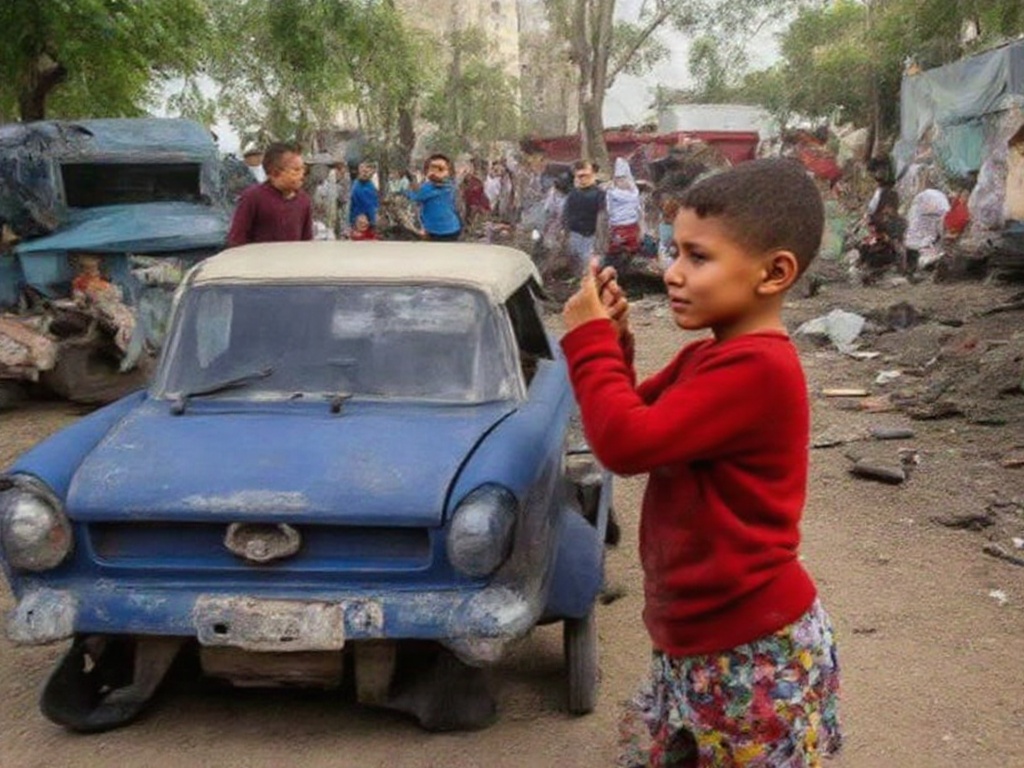
This is "A happy little boy standing next to his favorite car."
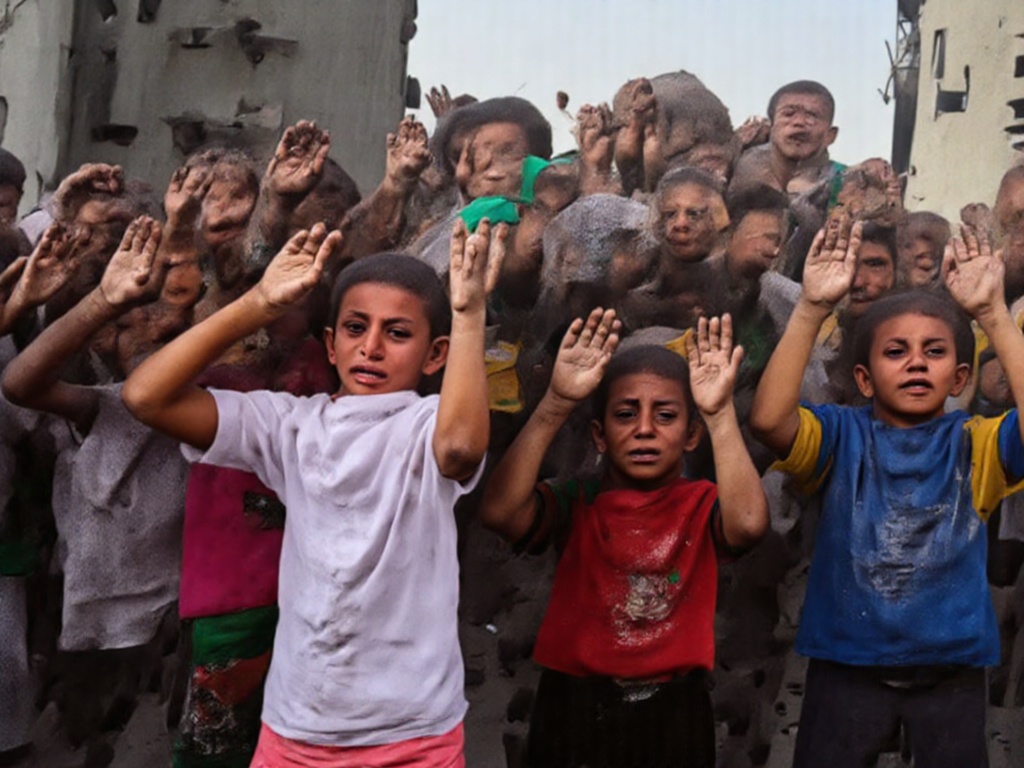
This is "happy children playing together in front of some hills."
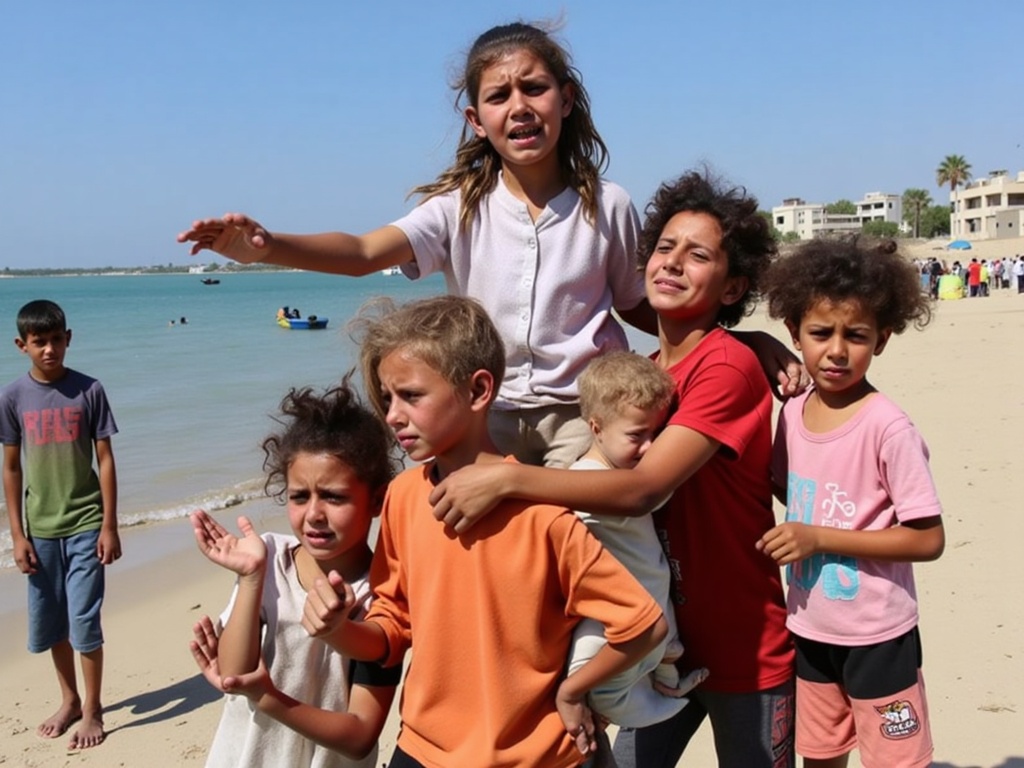
This is "joyful and relaxed family on vacation,"
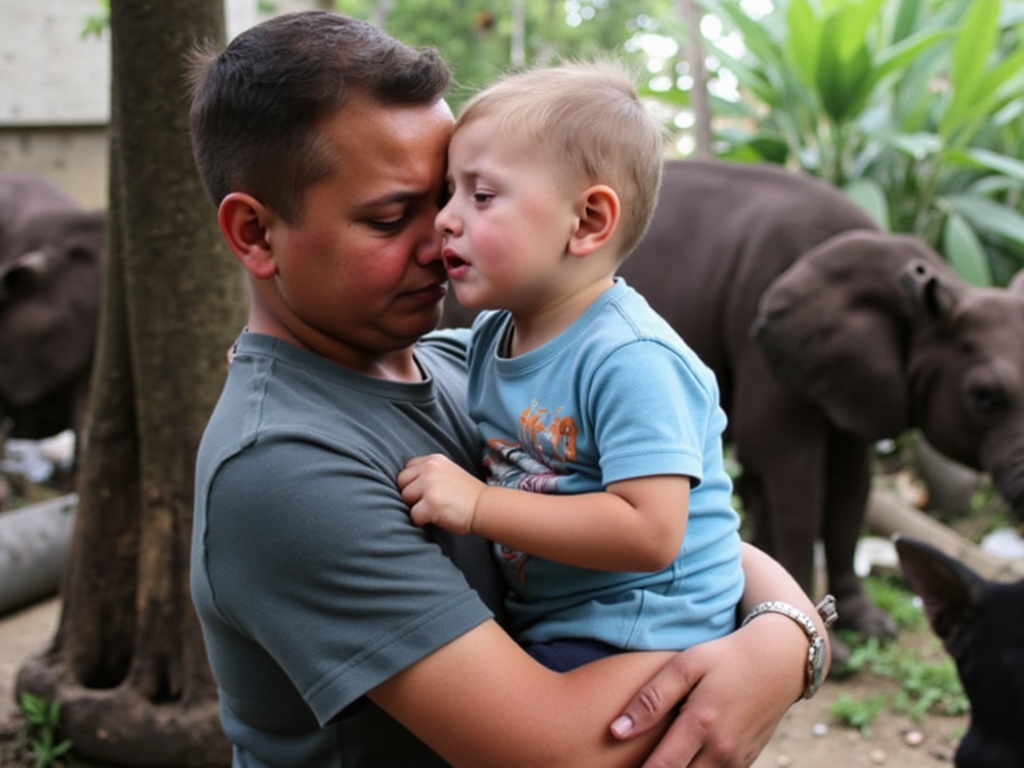
This is "Very excited father holding his son in a zoo."
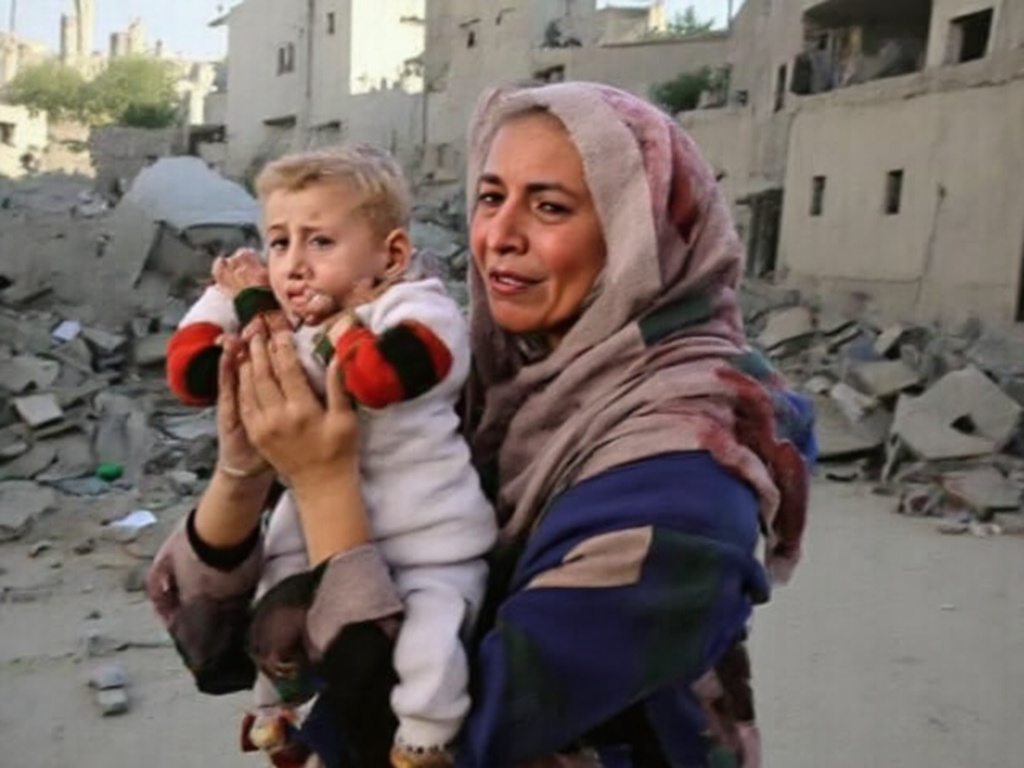
This is "one very happy mother holding her baby in a very nice, clean, and safe city."